

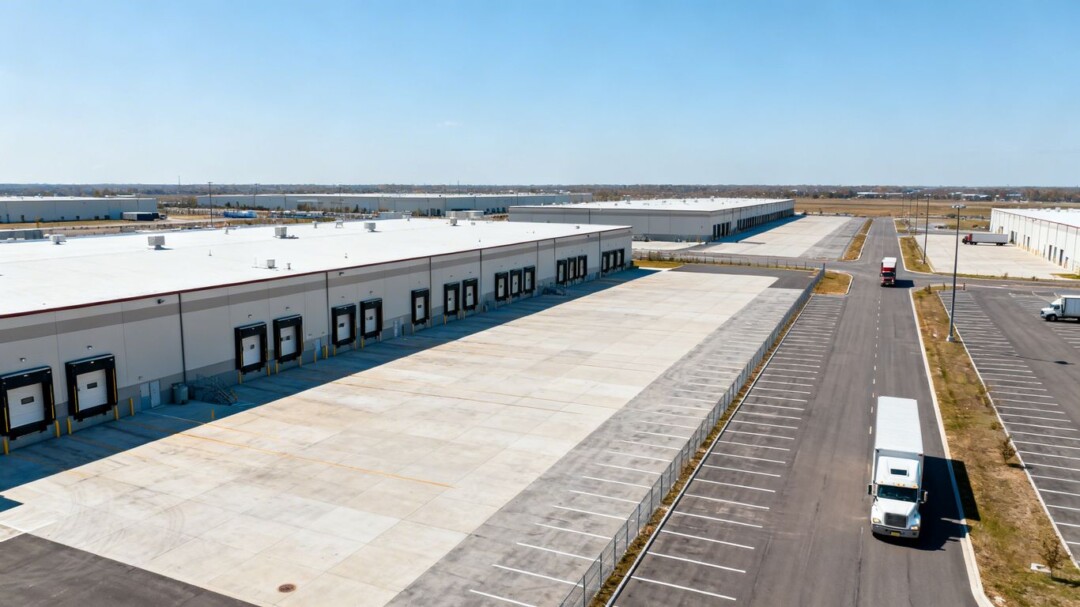
Leaders from across the commercial real estate industry recently convened at the Connect Industrial Midwest event to discuss the robust state of the industrial sector. The consensus pointed towards a combination of steady fundamentals, improving leasing activity, and a resurgence in capital movement, positioning the Midwest, particularly Chicago, for a significant increase in transaction volume throughout 2026.
Key Takeaways
- The Midwest industrial market is characterized by discipline rather than volatility, avoiding the oversupply seen in other regions.
- Leasing activity has seen a substantial increase, with tenant demand for well-located properties driving momentum.
- Capital movement, influenced by interest rates, is the primary driver of cap rates and future market dynamics.
A Stable Foundation for Growth
Unlike some higher-growth regions that experienced significant oversupply in recent years, the Midwest has maintained a more balanced approach. Kevin Brennan, Chief Investment Officer and Managing Principal of Brennan Investment Group, noted, "Luckily in the Midwest, we didn’t see a ton of supply and get way over our skis." This prudent development strategy has created a stable environment, setting the stage for increased transactional activity in 2026.
Surging Leasing Activity and Undersupply Concerns
Brendan Sheahan, Vice President, Market Officer at Tradelane Properties, expressed optimism for the coming year, stating, "I think we’re almost certainly going to see more transactional activity than we did in 2025." He further highlighted Chicago’s strong position, suggesting that "in terms of tenant velocity, you could make the argument that Chicago is actually a little bit undersupplied." This strong tenant demand is reflected in recent leasing figures, with John Joyce, Managing Director at SVN Chicago Commercial, reporting a "pretty big pickup with last year being up about 33%."
The Driving Force: Capital and Location
While strong fundamentals are crucial, panelists emphasized that the movement of capital is the key determinant of the market’s trajectory. "The movement of capital is what’s driving cap rates," explained Alfredo Gutierrez, President and Founder of SparrowHawk. "Interest rates are just a function of the equation." Geoffrey Kasselman, CEO of Evoke Partners, pointed to critical factors for modern industrial users, emphasizing "location, power, readiness."
Andrew Kim, Director, Originations at Thorofare Capital, shared positive production and transaction volume figures for 2025, indicating a healthy market. The insights shared at Connect Industrial Midwest 2026 underscore a positive outlook for the industrial real estate sector, driven by disciplined growth and renewed capital interest.