

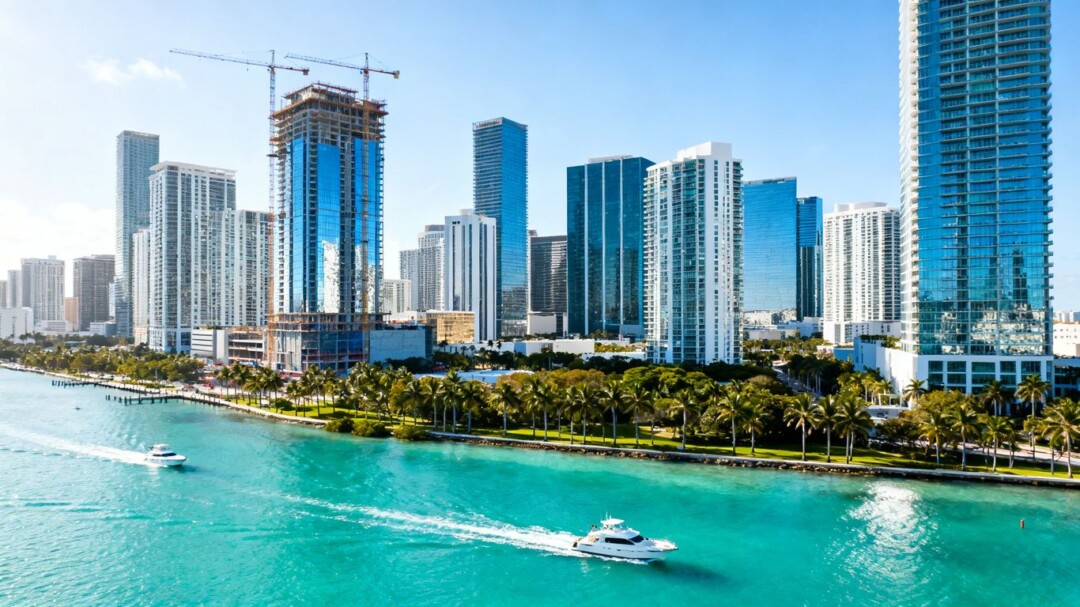
As a new year dawns, South Florida’s real estate landscape is poised for significant transformation. Leading developers are focusing their investment strategies on key urban centers, particularly Downtown Miami and the Brickell area, anticipating continued growth and demand through 2026. This strategic focus is driven by a confluence of factors including economic opportunity, a high quality of life, and improving infrastructure.
Key Takeaways
- Developers are concentrating on submarkets close to Downtown Miami and Brickell, prioritizing walkability, amenities, and proximity to commerce.
- Smaller living spaces are becoming more popular, with residents valuing location and nearby conveniences over unit size.
- South Florida continues to attract a diverse range of new residents, from the ultra-wealthy to middle-income earners, drawn by economic opportunities and lifestyle.
- Transportation improvements, such as the Brightline train, are enhancing the appeal of urban core living and driving development around transit hubs.
- High construction and land costs present challenges, leading to innovative design approaches and a focus on "New and Prime" properties.
Downtown Miami and Brickell: The Epicenter of Development
Industry insiders like Erik Rutter of Oak Row Equities, Ana Bozovic of Analytics Miami, and Daniel Kodsi of Royal Palm Companies are pinpointing Downtown Miami and Brickell as prime areas for new development. Bozovic highlights the approved Citadel tower, set to be the tallest office building in South Florida, as a testament to the demand for Class-A office space in the financial capital. Rutter echoes this sentiment, comparing Brickell Bay Drive to New York’s Fifth Avenue and noting a significant $520 million deal his firm recently closed in the area.
Beyond these core areas, large-scale projects like the Miami Worldcenter, a 27-acre mixed-use development, and the Signature Bridge, which aims to enhance connectivity and add park space, are reshaping the urban fabric. These developments are strategically located to connect the urban core with surrounding neighborhoods, fostering a more integrated and accessible city.
Shifting Development Trends
The nature of new developments is also evolving. Kodsi observes a trend towards smaller living spaces, where residents prioritize immediate access to restaurants, shopping, and transportation over expansive apartment sizes. This shift reflects a broader change in consumer preferences, emphasizing convenience and lifestyle.
Furthermore, Rutter anticipates a rise in "Live Local Projects," which combine multifamily housing with workforce housing components, alongside continued condo development. These projects aim to address the growing demand for housing across various income levels.
Attracting New Residents
South Florida’s appeal extends beyond its luxury offerings. Experts agree that the region is attracting a wide spectrum of new taxpayers, not just the ultra-rich. Bozovic notes that the median incomes of those moving to Miami-Dade County are significantly higher than those leaving, indicating a strong influx of skilled professionals and families drawn by the area’s economic vitality and quality of life.
Transportation and Urban Growth
Improvements in public transportation are a significant catalyst for development. The Brightline train service, connecting major South Florida cities, is making urban core living more attractive and sustainable. Kodsi emphasizes that growth will continue around public transit hubs as traffic congestion worsens with population increases.
Challenges and Opportunities
Despite the optimistic outlook, developers face considerable hurdles, primarily the escalating costs of land and construction. Bozovic points out that these factors make it nearly impossible to offer properties in the urban core for under $1,000 per square foot. This reality means that much of the new inventory is positioned as "New and Prime," commanding higher prices.
Developers are exploring innovative design solutions to mitigate these costs. Meanwhile, areas like Coconut Grove, Coral Gables, and South Miami, while largely built out with single-family homes, are seeing redevelopment through the renovation and rebuilding of existing properties.