

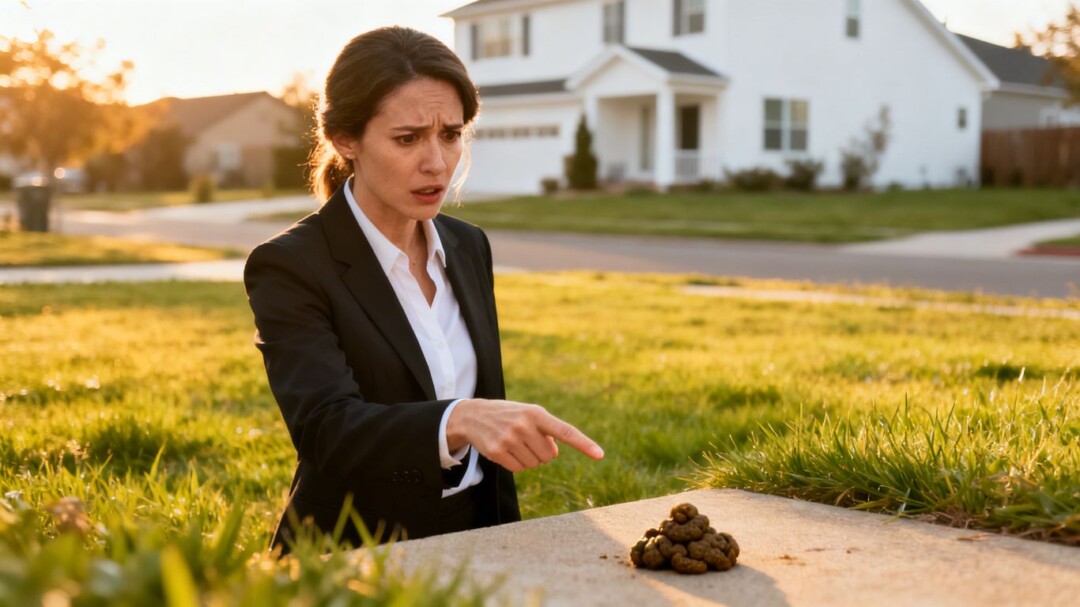
Dealing with a neighbor’s dog leaving waste on your lawn can be a frustrating experience. A recent query to a real estate professional highlights this common neighborhood dispute and offers a structured approach to resolving it. The advice emphasizes communication, documentation, and understanding local regulations to protect your property rights while maintaining neighborly peace.
Key Takeaways
- Direct, calm communication is the first step.
- Document incidents with dates, times, and photos.
- Research local ordinances and HOA rules.
- Escalate to authorities if necessary.
- Implement temporary deterrents for immediate relief.
Addressing the Issue Directly
When faced with a neighbor’s dog repeatedly relieving itself on your property without the owner cleaning up, the initial and most crucial step is direct communication. Approach your neighbor calmly and politely, explaining the problem and its impact on you. Often, people may not realize the inconvenience they are causing. If direct conversation feels uncomfortable, a respectful, non-accusatory written note can also be effective.
Documenting the Problem
If the initial conversation or note doesn’t resolve the issue, it’s time to start documenting. Keep a detailed record of each incident, noting the date and time. Taking photographs, while being mindful of privacy, can serve as valuable evidence if further action is required. This documentation is essential for building a case if you need to escalate the matter.
Understanding Local Regulations
Investigate your local ordinances or homeowner association (HOA) rules. Many municipalities have specific regulations requiring pet owners to clean up after their animals. Familiarizing yourself with these laws will strengthen your position and provide a clear understanding of your rights and the neighbor’s responsibilities.
Escalating When Necessary
If the problem persists despite your efforts, it may be time to escalate. Contact your community association manager or your city’s code enforcement department. Present your documentation and explain the steps you’ve already taken. While these processes can sometimes be slow, persistence and patience are key to achieving a resolution.
Temporary Lawn Protection
While working on a long-term solution, consider implementing temporary measures to protect your lawn and reduce stress. This could include placing signage, using physical deterrents, or strategically watering your lawn. These are not permanent fixes but can help mitigate damage and provide some immediate relief.