

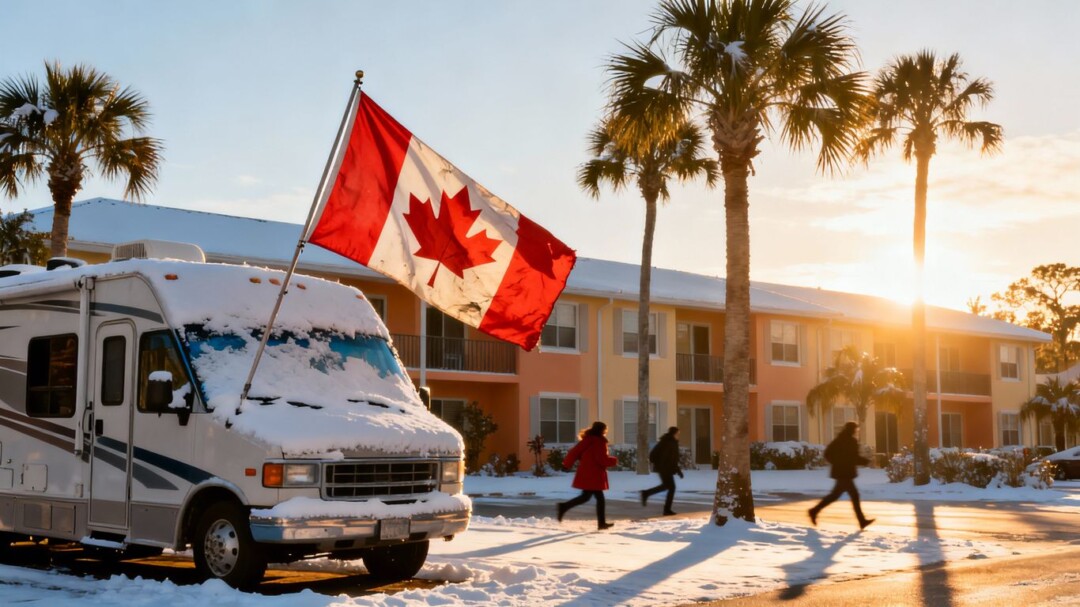
A growing number of Canadian "snowbirds" are finding it increasingly difficult to leave their beloved Florida properties, as a challenging housing market, exacerbated by political sentiment, makes selling a daunting prospect. Many who once sought refuge from harsh winters in the Sunshine State now feel unwelcome and are struggling to exit the market they helped inflate.
Key Takeaways
- Canadian snowbirds are facing difficulties selling their Florida properties due to an oversupply of homes on the market.
- Political rhetoric from U.S. leaders has contributed to a feeling of being unwelcome, prompting many Canadians to consider leaving.
- Southwest Florida’s real estate market is particularly affected, with significant price declines projected.
- The exodus of Canadian buyers is impacting local economies in Florida.
The Unwelcome Mat: Political Climate Drives Exodus
For years, Florida has been a prime destination for hundreds of thousands of Canadians seeking warmer weather. However, a shift in political sentiment, including remarks from U.S. President Donald Trump and Florida Governor Ron DeSantis, has made many snowbirds feel unwelcome. This perceived hostility, coupled with ongoing trade disputes, has led some, like Donna Lockhart from Ontario, to decide it’s time to sell and leave.
"If they don’t want us there, we don’t need to be there," Lockhart stated, reflecting a sentiment shared by many who feel alienated by the current political climate.
A Stalled Departure: The Housing Market Squeeze
The desire to leave Florida is clashing with a difficult real estate market. Southwest Florida, a popular region for Canadians, is experiencing an oversupply of homes for sale. This surge in inventory, partly due to the influx of Canadians trying to sell, has led to a significant drop in demand and prices. Joel Berner, a senior economist at Realtor.com, noted that "prices are coming down considerably and time on the market is up."
Several factors are contributing to the housing market’s woes in southwest Florida. Recent hurricanes have damaged properties and driven up insurance costs, with average policy prices increasing by approximately 40% in three years. The post-COVID-19 housing boom has ended, yet new home construction continues, further increasing supply. This combination of factors creates an unfavorable environment for sellers.
Economic Repercussions in the Sunshine State
The decline in Canadian visitors and property owners is having a tangible impact on Florida’s economy. Restaurants, small businesses, and local workers in tourist towns are feeling the pinch of absent snowbirds. Allen Spence, a Democratic candidate for U.S. Congress in Sarasota, highlighted that "the Canadian boycott is absolutely affecting us. It’s hurting us financially."
Canadians contribute significantly to Florida’s economy, paying an estimated $600 million annually in property taxes alone. Their extended stays, often lasting weeks or months, also support local businesses. With fewer Canadians present, the tax burden is shifting more towards residents. The situation underscores a complex interplay between political relations, economic interests, and the personal decisions of snowbirds.
Looking Ahead: Uncertainty and Shifting Plans
Many snowbirds, like Lockhart, are now reconsidering their selling timelines, opting to wait until 2027 in hopes of a market recovery. Others, like John Willows, are choosing to boycott Florida altogether, opting for destinations like Cuba. The current situation reflects a significant shift in the long-standing tradition of Canadian snowbirds flocking to Florida, driven by a confluence of political unease and economic challenges.