

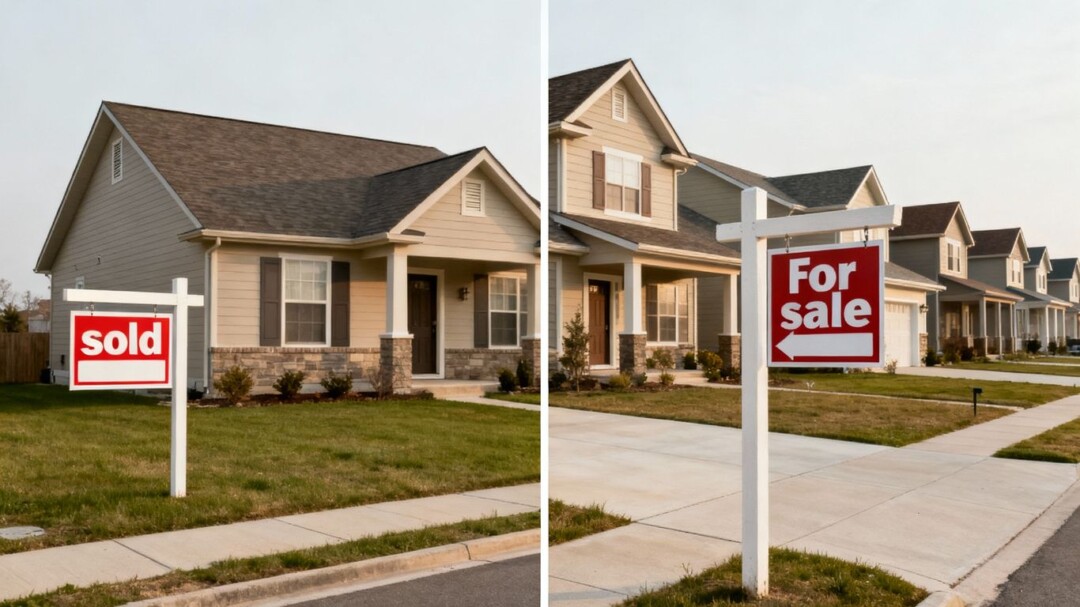
Florida’s once red-hot housing market is showing clear signs of a significant shift, moving from a seller’s advantage to a more balanced environment favoring buyers. This transition is driven by increasing inventory, falling interest rates, and a recalibration of home prices, signaling a "rebalancing" after years of rapid appreciation.
Key Takeaways
- Inventory levels are rising in many parts of Florida, a departure from the pandemic-driven scarcity.
- Home prices have seen year-over-year declines in some areas, making properties more accessible.
- Falling mortgage rates are improving affordability for potential buyers.
- While some markets, like Cape Coral, face challenges, luxury markets like Naples remain strong, indicating a diverse market landscape.
- A significant number of homeowners are delisting properties rather than selling at lower prices, contributing to the inventory dynamics.
A Market in Transition
After experiencing explosive growth during the pandemic, fueled by remote workers and those relocating from high-cost states, Florida’s housing market is now undergoing a correction. Home prices, which surged significantly, have started to decline in some regions. For instance, data shows a year-over-year decrease in median sale prices, with some areas seeing prices down by over 4%.
This shift is partly attributed to a rise in inventory. While some reports indicate a slight decrease in overall listings, this is largely due to homeowners choosing to delist their properties rather than sell them at prices they deem too low. This phenomenon, particularly noticeable in areas like Miami and Tampa, suggests sellers are becoming more attuned to current market conditions.
Buyers Find New Opportunities
The combination of increased inventory and falling mortgage rates is creating a more favorable environment for buyers. As interest rates decrease, monthly payments become more affordable, enticing buyers who were previously priced out or hesitant. This has led to an increase in pending sales in some regions, with experts predicting a resurgence of buyers re-entering the market.
However, affordability remains a concern for many Floridians. While home prices have decreased and the required salary to purchase a home has fallen from its peak, it remains significantly higher than pre-pandemic levels. The average income in Florida still lags behind the salary needed to comfortably afford a home, highlighting a persistent affordability gap.
A Tale of Two Floridas
The state’s housing market is not monolithic. While some areas, like Cape Coral, have been identified as facing market challenges with a notable percentage of homeowners owing more than their property is worth, luxury markets such as Naples continue to thrive. High-end properties are still attracting significant investment, showcasing a bifurcated market with distinct buyer profiles and price points.
Experts describe the current situation not as a market crash, but as a "rebalancing" or "reset." Sellers are being compelled to adjust their expectations to align with current demand and economic realities. While the market is moving towards a more realistic middle ground, a full return to pre-pandemic affordability levels is not anticipated in the near future, with some forecasts suggesting further price corrections.
Sources
- Near America’s worst housing market, Florida real estate experts see signs of life, Fox Business.
- Florida’s housing market was skewed wildly by the pandemic. It’s finally coming to grips with a ‘realistic
middle ground’, Fortune. - Eye on Your Money: South Florida housing market shifts in buyers’ favor as rates fall, inventory rises, CBS News.
- Florida’s Housing Market Has ‘Flipped’ for Homebuyers, Newsweek.