

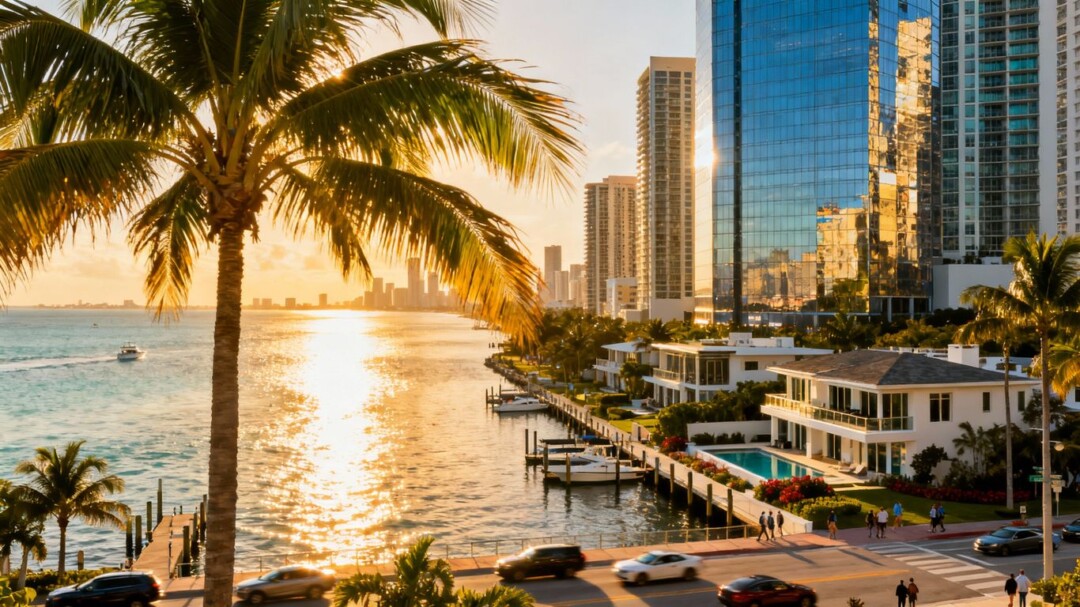
South Florida’s real estate market is experiencing a significant surge in investment, primarily driven by buyers from Latin America and China. These international investors are injecting substantial capital into the region, particularly in Miami, seeking stable assets and lifestyle opportunities amidst economic and political uncertainties in their home countries.
Key Takeaways
- Latin American buyers accounted for $367 million in South Florida real estate transactions between August 2023 and July 2024.
- These buyers represent 29% of all foreign real estate investments in the U.S.
- 91% of Latin American buyers acquire property for investment purposes, such as rentals.
- 68% of these transactions are paid for in cash, indicating strong liquidity and a preference for dollarizing savings.
- Chinese citizens are also showing significant interest, ranking among the top international buyers despite recent legislative challenges.
- Foreign buyers are crucial for new construction sales, accounting for nearly half of all new South Florida condo sales over an 18-month period.
Latin American Dominance in Real Estate
Latin American investors are making a substantial impact on the South Florida property market, with investments reaching hundreds of millions of dollars. Political and economic instability in countries like Brazil, Argentina, Colombia, and Venezuela are key drivers for these individuals seeking a safe haven for their wealth and a higher quality of life. Miami, in particular, serves as a financial and cultural hub, attracting high-net-worth individuals looking for stable, profitable real estate opportunities. Many of these buyers are interested in investment properties, whether for long-term rentals or vacation homes, and a significant portion opts for cash payments to secure their assets.
Chinese Interest and Market Dynamics
Chinese citizens are also emerging as significant players in the South Florida real estate scene. Despite potential impacts from trade wars and recent legislation like Florida’s SB 264, which restricts property ownership for Chinese nationals without permanent U.S. residency, interest remains high. This sustained interest is partly attributed to ongoing legal challenges to the law, which have temporarily halted its enforcement. Furthermore, initiatives like the U.S. "Gold Card" investor visa, offering permanent residency for a substantial investment, could further boost interest from Asian markets.
Factors Driving Foreign Investment
Several factors contribute to South Florida’s appeal for international buyers. Proximity, cultural ties, and a favorable tax environment are significant draws. Miami’s lifestyle, including its beaches, vibrant business scene, and luxury properties, attracts those seeking both investment and quality of life. The region’s robust real estate market, consistent population growth, and strong legal protections for property owners provide a sense of security. Additionally, the ease of financing for foreign nationals and the potential for steady property appreciation and rental income make it an attractive destination. Developers are actively catering to this market by designing properties with international buyers in mind and marketing extensively in Latin America and Asia.
Impact on New Construction
International buyers, predominantly from Latin America, play a critical role in the new construction sector of South Florida. They are responsible for a substantial portion of sales in new condominium projects, indicating a strong demand for pre-construction properties. This trend highlights Miami’s position as a global real estate hub, attracting capital from around the world and shaping the region’s evolving skyline.
Sources
- Latin American buyers dominate South Florida Real Estate investments | Real Estate, IslanderNews.com.
- Chinese Citizens Eye South Florida Property Market, Newsweek.
- The Impact of HNWI from Latin America on the Real Estate Market in Florida, Funds Society.
- The Surge of Investors Buying Property in Florida, Digital Journal.
- Latin American buyers dominate Miami’s condo market, Miami Herald.