

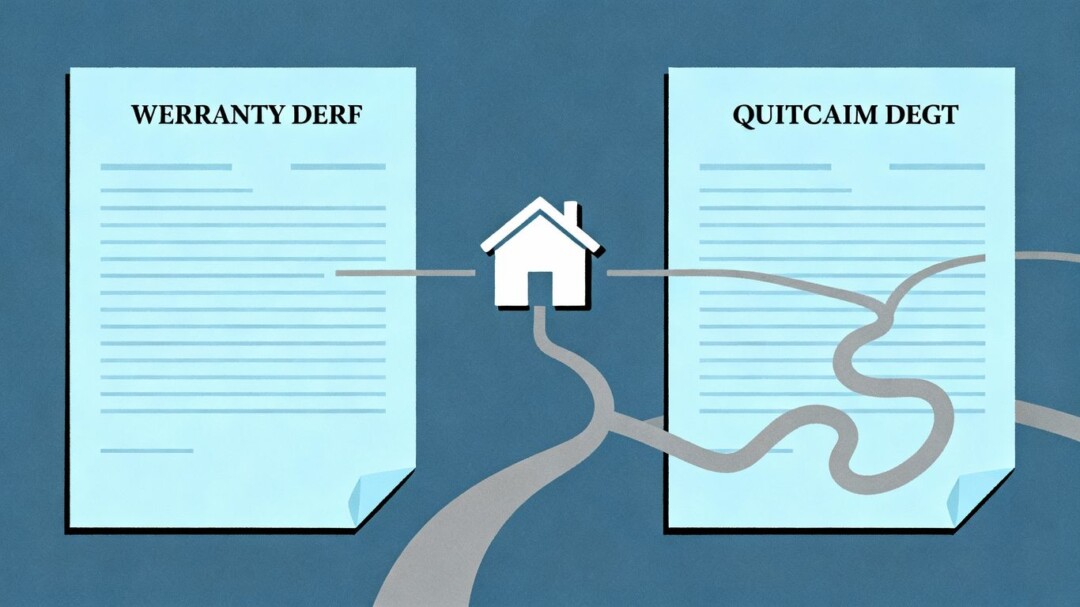
Navigating property transactions involves understanding the legal documents that transfer ownership. Two common types of deeds, the Warranty Deed and the Quitclaim Deed, serve this purpose but differ significantly in the guarantees they offer. Choosing the right deed is crucial for both buyers and sellers to manage risk and ensure clarity in property transfers.
Key Takeaways
- Warranty Deeds offer the highest level of protection to the buyer, with the seller guaranteeing clear title.
- Quitclaim Deeds transfer whatever interest the seller has, without any guarantees about the title’s condition.
- The choice between the two depends on the specific circumstances of the property transfer, including the relationship between parties and whether a title search has been conducted.
Understanding the Difference
Both Warranty Deeds and Quitclaim Deeds are legal instruments used to transfer title of a property from a grantor (seller) to a grantee (buyer). The fundamental difference lies in the assurances provided by the grantor. With a Quitclaim Deed, the grantor simply "quits" any claim they have to the property, offering no warranties or guarantees about the title’s status. Conversely, a Warranty Deed includes explicit guarantees from the grantor that the title is unencumbered and free from any defects or claims.
When to Use Each Deed
In a standard real estate closing, particularly in Florida, a Warranty Deed is typically preferred. This is because the process usually involves a title company conducting a thorough title search and working to resolve any issues before the sale is finalized. This due diligence provides the buyer with confidence that the property’s title is clear and protects the seller from future claims related to title defects.
A Quitclaim Deed is often more suitable in situations where a formal title search is not performed, or when the parties involved have a high degree of trust in each other. This might include transferring property between family members, adding a spouse to a property title, or correcting errors in previous property documents. Sellers should exercise caution when using a Warranty Deed outside of a formal closing process, as it can expose them to potential liability if title issues arise later.
Ultimately, the decision of which deed to use hinges on the specific circumstances of the property transfer. Consulting with a real estate attorney can help ensure the correct deed is chosen for your situation, providing clarity and security for all parties involved.