

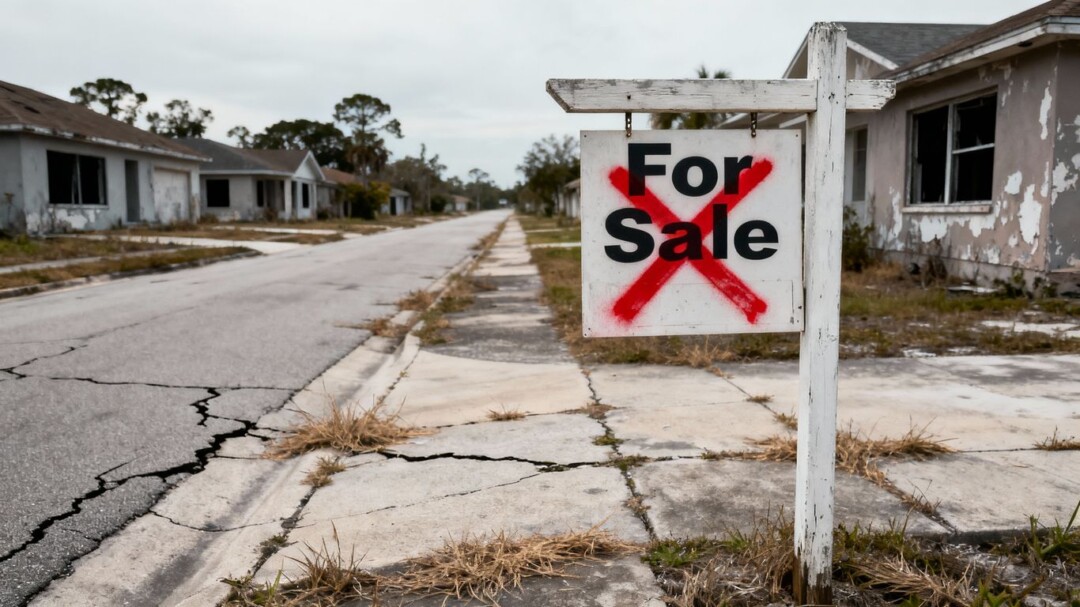
South Florida is emerging as the epicenter of housing market weakness in the United States, experiencing the steepest declines in pending home sales among major U.S. metro areas. This downturn follows a period of rapid price appreciation during the pandemic, leading to concerns about a prolonged bubble deflation.
Key Takeaways
- Pending home sales in Miami, Fort Lauderdale, and West Palm Beach saw significant drops in April compared to the previous year.
- Homes are staying on the market considerably longer in South Florida than the national average.
- Median home sale prices across Florida have fallen year-over-year, with a notable percentage of homes selling below asking price.
- Experts warn of a "long, slow deflation" of the housing bubble, though a nationwide collapse is not necessarily indicated.
South Florida’s Housing Slowdown
A Bloomberg analysis of Redfin data reveals that Miami experienced a 23% drop in pending sales, while Fort Lauderdale and West Palm Beach saw declines of 19% and 14%, respectively. This marks the most significant downturn among the top 50 largest U.S. metro areas. Homes in these South Florida cities are also taking much longer to sell, with median times to sell exceeding 80 days, more than double the national average of 40 days.
Shifting Market Dynamics
After a historic run-up in prices during the pandemic, where homes frequently sold above asking price, the market has shifted. In April, the median home sale price across Florida decreased by 3.2% year-over-year. Furthermore, nearly 5% of homes in West Palm Beach, Miami, and Fort Lauderdale sold below their asking price, a stark contrast to the national figure of 0.77%.
Chen Zhao, head of economics research at Redfin, described the situation as a "really long, slow deflation of that bubble" and cautioned that while Florida is currently the hardest-hit, the weakness could potentially spread to other parts of the country.
National Context and Affordability Challenges
Despite the localized weakness in Florida, the national housing market has shown resilience, with the median U.S. home sale price increasing by 1.3% year-over-year in April. Over the past five years, U.S. home prices have surged by approximately 45%. However, affordability remains a significant issue nationwide due to a persistent housing shortage, estimated by Zillow to be 4.5 million homes. This imbalance continues to support demand and rental prices in many regions.
Investor Sentiment and Future Outlook
Concerns about the broader economy, including warnings of potential recession, are also influencing market sentiment. While some experts point to gold as a safe-haven asset, real estate continues to be viewed by many investors as a hedge against inflation. However, the current high home prices, elevated mortgage rates, and rising insurance costs in Florida are making real estate investment less attractive for some, particularly institutional investors, leading to increased inventory and price reductions as sellers seek to exit the market.
Potential for Market Correction
Analysts suggest that Florida’s market is undergoing a natural correction after years of overheating. The cooling of domestic migration and a decrease in investor activity are contributing factors. While some see opportunities for investors in a less competitive market with more flexible sellers, the overall trajectory will likely depend on broader economic conditions and mortgage rates.
Sources
- This 1 part of Florida is
emerging as America’s ‘epicenter of housing weakness’ — expert warns of ‘really long’
bubble deflation. Will it spread to the rest of the US?, Moneywise. - South Florida now emerging as the ‘epicenter of housing weakness’ — but will it spread to the rest of the US?, AOL.com.
- South Florida now emerging as the ‘epicenter of housing weakness’ — but will it spread to the rest of the US?, Yahoo Finance.
- Florida’s Housing Market ‘Turning Down Fast’, Newsweek.