

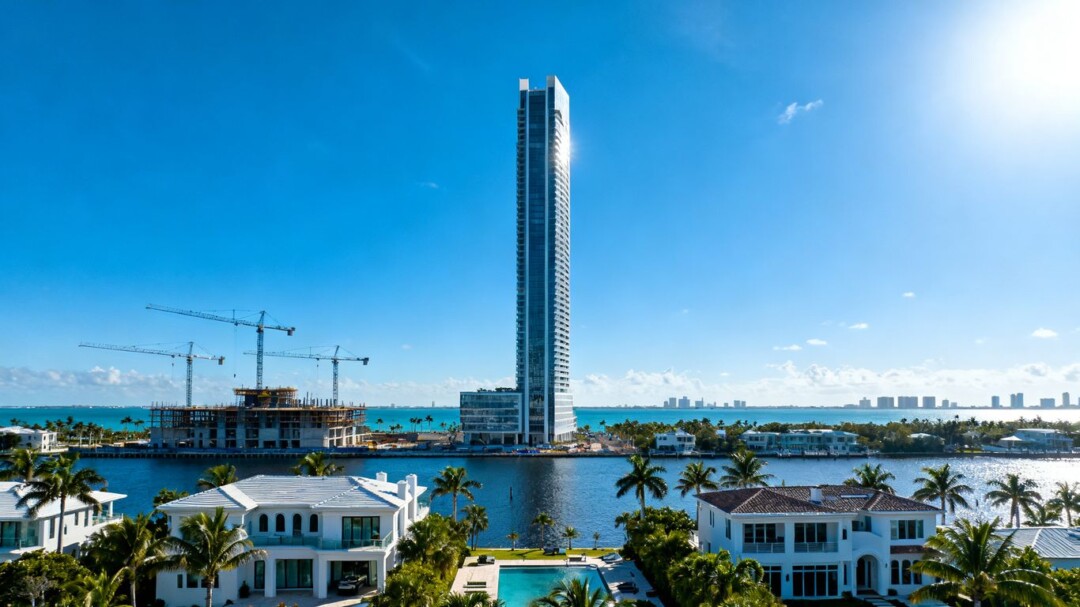
Fort Lauderdale is drawing a growing wave of New York developers seeking South Florida growth beyond Miami. They are planning luxury condominiums, rental towers and mixed-use projects, betting that the city’s relative affordability, younger downtown population and improving connections will attract residents and investors looking for a quieter alternative.
Key takeaways
- New York firms are associated with 4.6 million square feet of downtown Fort Lauderdale development—nearly half the area’s development footprint.
- Developers are building luxury condos, rental housing and mixed-use projects, including a planned 754-unit, two-tower development.
- Migration from New York, downtown population growth and regional transportation links are strengthening the investment case.
New York firms expand their footprint
The scale of New York developers’ involvement marks a shift from recent years. They accounted for about 13% of completed Fort Lauderdale projects from 2021 through 2024; their current plans represent a much larger share of the downtown development pipeline, according to figures reported by Bloomberg.
Brooklyn developers Isaac Schlesinger and Simon Dushinsky, co-founders of Dependable Equities, are pursuing three Fort Lauderdale projects after building condominiums in several Brooklyn neighborhoods. Their first, Ombelle, is planned as two towers with 754 units and is expected to be completed around 2028. Schlesinger said one tower was already 45% presold. The project is also slated to include the city’s first Equinox gym.
New York-based developer Miki Naftali is also expanding in the city, with plans for more than 250 condominiums and a rental building in Flagler Village, as well as a separate mixed-use development.
A lower-cost alternative to Miami
Developers are pitching Fort Lauderdale to buyers who want access to South Florida but prefer a less crowded setting than Miami. The median home sale price in Fort Lauderdale is about $70,000 below Miami’s, according to Redfin figures cited in the report. The difference was roughly $120,000 a year earlier, suggesting the price gap has narrowed.
Naftali described Fort Lauderdale as an option for people seeking a calmer pace. He also forecast substantial price appreciation over the next five to 10 years, arguing that the city’s transformation is still in its early stages. That outlook is an investment bet, not a guarantee: continued demand and project delivery will help determine whether prices rise as developers expect.
Migration and connections support demand
More than 125,000 New Yorkers moved to Florida between 2018 and 2022, bringing nearly $14 billion in adjusted gross income, according to a Citizens Budget Commission analysis. About 41,250 settled in Miami-Dade, Palm Beach or Broward counties. New York remains the leading source of interstate newcomers to downtown Fort Lauderdale, according to a local development group cited in the report.
The city is also attracting younger residents: the number of adults under 45 living downtown has increased 25% since 2020. Transportation adds to its appeal. Brightline trains connect Fort Lauderdale and downtown Miami in about 40 minutes, while airlines have expanded service at Fort Lauderdale’s airport following Spirit Airlines’ shutdown.
Together, those trends are encouraging developers to position Fort Lauderdale as a distinct luxury market between Miami and Palm Beach—not simply a lower-priced substitute, but a city they believe can draw its own residents and investment.