

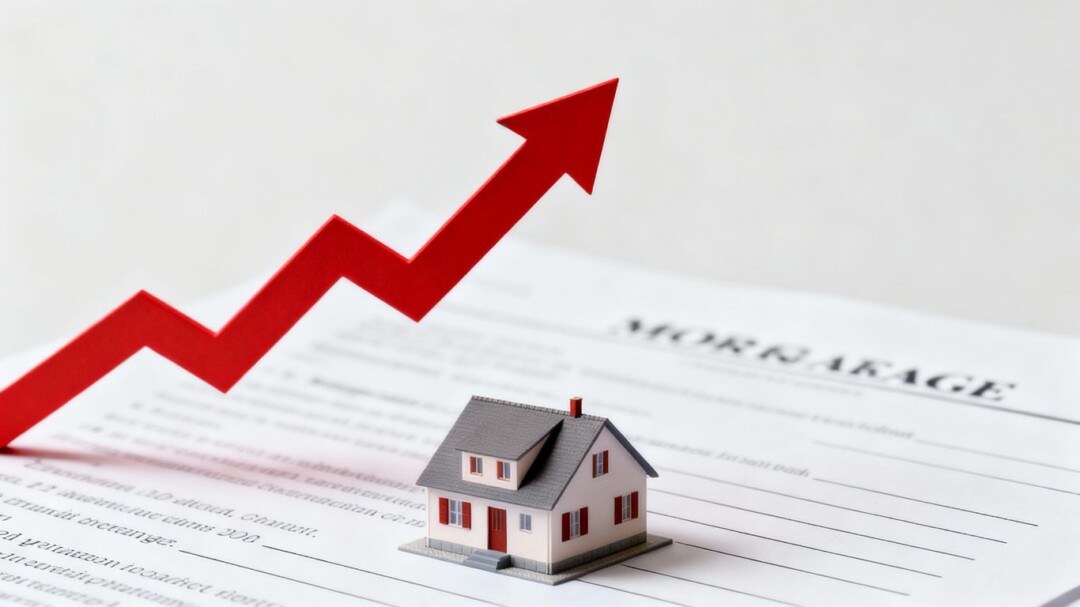
The average interest rate for long-term U.S. mortgages saw a slight increase for the second consecutive week, though it remains positioned just above its lowest point in over three years. This uptick follows a period of rate reductions at the end of last year and comes amidst broader economic factors influencing the housing market.
Key Takeaways
- The 30-year fixed-rate mortgage has risen to 6.1% from 6.09% last week.
- Borrowing costs for 15-year fixed-rate mortgages also increased, now averaging 5.49%.
- Mortgage rates are influenced by Federal Reserve policy, bond market expectations, and geopolitical tensions.
- The U.S. housing market has experienced a sales slump since 2022, exacerbated by high rates and limited inventory.
- Mortgage applications declined last week, with refinancing applications seeing a significant drop.
Mortgage Rate Trends
The benchmark 30-year fixed-rate mortgage rate nudged up to 6.1% from 6.09% the previous week, according to Freddie Mac. This is a notable decrease from the 6.95% average recorded a year ago. Similarly, borrowing costs for 15-year fixed-rate mortgages, a popular choice for homeowners looking to refinance, inched up to 5.49% from 5.44% weekly. A year prior, this rate stood at 6.12%.
Factors Influencing Mortgage Rates
Mortgage rates are sensitive to a variety of economic indicators. Key among these are the Federal Reserve’s interest rate policy decisions and the expectations of bond market investors regarding the economy and inflation. These rates generally track the yield on the 10-year Treasury note, which lenders use as a benchmark for pricing home loans. The 10-year Treasury yield was trading around 4.24% midday Thursday, a slight dip from the previous week.
The Federal Reserve recently decided to pause its interest rate cuts after implementing three reductions in late 2025 to support the job market. While the central bank does not directly set mortgage rates, its short-term rate adjustments significantly influence bond investors and, consequently, the yields that impact mortgage pricing.
Recent geopolitical tensions have also contributed to upward pressure on mortgage rates.
Impact on the Housing Market
The U.S. housing market has been navigating a sales slump since 2022, a period marked by rising mortgage rates from their pandemic-era lows. The combination of elevated borrowing costs, substantial home price appreciation over recent years, and a persistent shortage of available homes due to a decade of below-average construction has priced many prospective buyers out of the market. Sales of existing U.S. homes remained at 30-year lows last year.
Despite these challenges, a decrease in mortgage rates that began in late summer provided a modest boost to existing home sales towards the end of last year, with December sales jumping 5.1% month-over-month. However, the recent uptick in rates has led to a decrease in mortgage applications. Overall applications fell 8.5% last week, with refinancing applications dropping 16% but still constituting 56.2% of all applications. Purchase loan applications saw a slight decrease of 0.4%.
Economists generally anticipate mortgage rates to decline further this year, though forecasts suggest the average 30-year mortgage rate will likely remain above 6%. This level is still considerably higher than rates seen six years ago. For many homeowners who secured mortgages at historically low rates earlier this decade, current rates would need to fall significantly to incentivize a new loan.
Data from Realtor.com indicates that approximately 69% of U.S. homes with outstanding mortgages have a fixed rate of 5% or lower, with over half holding rates at or below 4%. "While slightly better rates have supported modest increases in sales and helped temper affordability pressures, the recovery is expected to be slow and uneven until rates move significantly lower and inventory expands further," commented Jiayi Xu, an economist at Realtor.com.