

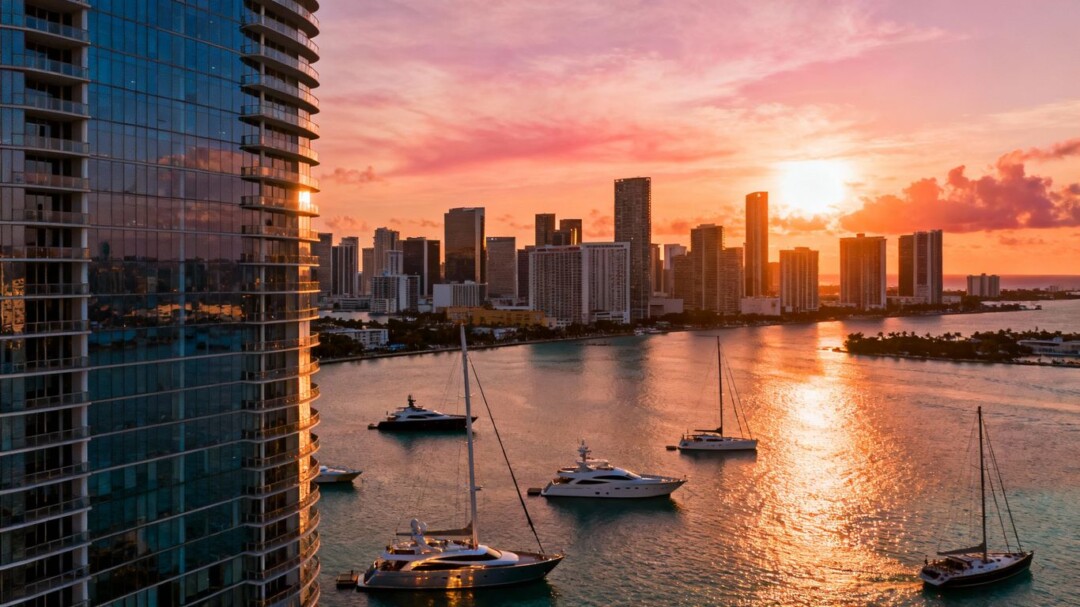
Miami’s ultra-luxury real estate market is experiencing a significant structural shift in 2026, marked by record-breaking contract signings and a surge in high-net-worth individuals relocating to the area. This isn’t a fleeting trend but a sustained movement driven by long-term capital preservation and lifestyle considerations.
Key Takeaways
- January 2026 saw the strongest start on record for $10M+ contracts, indicating robust market activity.
- Ultra-luxury transactions in South Florida are consistently strong, driven by wealth migration rather than speculative investment.
- Buyers are prioritizing stability, global accessibility, and a maturing financial ecosystem over short-term market fluctuations.
- International cash buyers are a major force, viewing Miami as an undervalued market compared to global hubs.
A Market Operating on a Different Cycle
In the first three weeks of January 2026, Miami recorded 56 contracts for properties valued at over $10 million, setting a new record for the month. While 2025’s total of 361 closed sales above $10 million trailed the pandemic-era peak of 2021, the underlying drivers of the market have fundamentally changed. Ultra-high-net-worth individuals are no longer reacting to interest rates or minor price shifts. Instead, their decisions are influenced by long-term policy, taxation, lifestyle, and capital preservation.
Why Miami Is Winning the Global Capital Shift
The influx of wealth into Miami’s luxury market is clearly data-driven, stemming from wealth migration rather than local buyers upgrading. Billionaires and centi-millionaires are choosing Miami for its predictability, global connectivity, desirable lifestyle, and a rapidly developing financial and tech sector. This trend has been accelerated by policies in other states perceived as less favorable to capital. Florida’s appeal lies in its stability and alignment with long-term capital preservation.
| State | Net Inflow of High-Earning Households | Inflow of High Earners (Returns) | Outflow of High Earners (Returns) | Household Income (AGI) of Inflowing High Earners | Household Income (AGI) of Outflowing High Earners |
|---|---|---|---|---|---|
| Florida | 29,771 | 46,874 | 17,103 | $907,013 | $294,189 |
| New York | -12,040 | 17,829 | 29,869 | $719,123 | $1,194,676 |
| California | -24,670 | 24,205 | 48,875 | $638,597 | $1,303,439 |
Global, Cash-Driven Buyers Are Repricing Miami Ultra-Luxury Real Estate
International buyers from Europe, the UK, Latin America, and Asia are significantly impacting Miami’s ultra-luxury market. Compared to global hubs like London or Hong Kong, Miami is perceived as relatively underpriced, especially for trophy and waterfront properties. Favorable currency exchange rates and Miami’s growing global stature further attract capital seeking both upside potential and safety. Crucially, this demand is predominantly cash-based, with over 80% of sales at the $10 million+ level being all-cash transactions. This contrasts with the national average of around 27% cash sales and highlights a market less susceptible to interest rate fluctuations.
The Strategic Takeaway for Buyers and Sellers
Miami’s ultra-luxury market is now characterized by capital allocation rather than traditional market cycles. Wealth is being repositioned globally towards jurisdictions offering stability and long-term capital protection. For sellers, accurately priced and well-positioned properties are trading quickly. For buyers, decisiveness is key, as waiting for a broad market correction may mean missing out on assets being acquired by long-term holders. This marks the beginning of a new, more concentrated market cycle in Miami.