

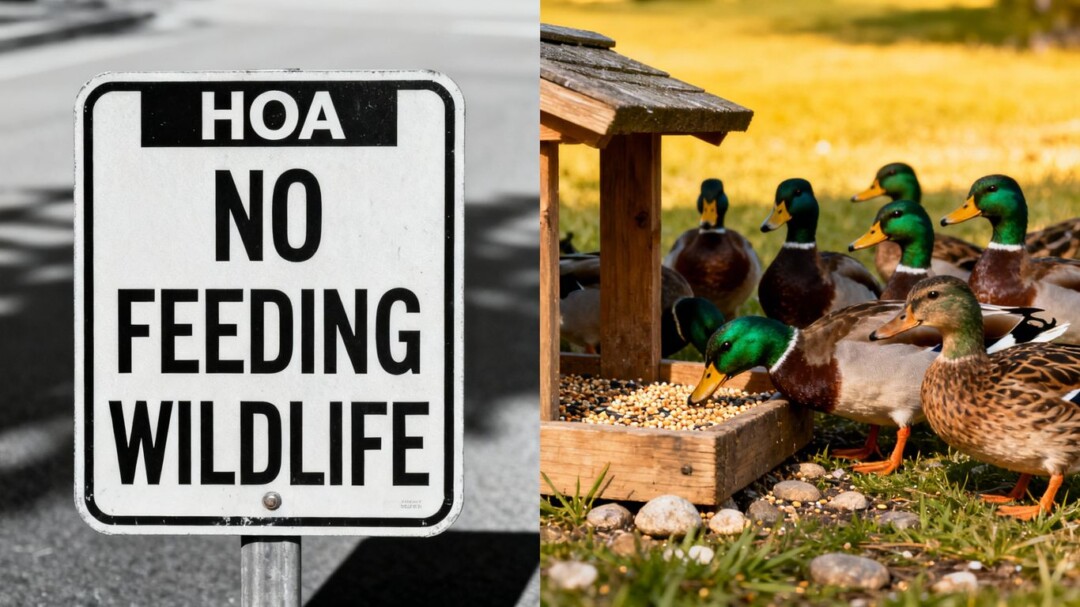
A recent query to a real estate professional highlights a common point of contention in community living: whether homeowners’ associations (HOAs) can prohibit residents from feeding local wildlife, specifically ducks. While many enjoy this pastime, HOAs often cite potential problems like pest attraction and environmental disruption as reasons to enforce such bans.
Understanding HOA Authority
Homeowners’ associations and condominium boards typically have rules in place to maintain order and protect shared community spaces. These regulations can extend to various aspects of resident behavior, including landscaping, parking, and, indeed, feeding wildlife. If an association determines that feeding ducks is causing issues such as attracting pests, creating messes, or negatively impacting the local ecosystem, it may possess the authority to restrict this activity.
Residents can review their community’s bylaws or regulations to ascertain if a specific rule applies to feeding wildlife. These documents outline permissible and prohibited actions, as well as the procedures for rule enforcement.
Addressing Disputes and Compromises
Should a resident disagree with an HOA’s decision regarding wildlife feeding, several options are available. The first step is to contact the board or management company to discuss the issue. Requesting clarification on the reasons behind the rule’s enforcement and exploring potential compromises, such as designated feeding areas or times, can be productive. Maintaining a polite and professional demeanor during these communications is often beneficial.
If the association remains firm on its decision, residents may need to accept the rule or consider the challenges of contesting it. It’s important to note that challenging HOA rules can be a costly and time-consuming process, potentially requiring legal assistance.
Broader Implications of Feeding Wildlife
Beyond community rules, there are broader ecological considerations associated with feeding ducks and other wildlife. While seemingly harmless, this practice can lead to unintended consequences. Ducks that become reliant on human food sources may lose their natural foraging abilities. Furthermore, leftover food can attract rodents and other pests, contributing to unsanitary conditions and messes within the neighborhood.
Finding a Balance
Ultimately, the situation calls for balancing personal enjoyment with the needs and well-being of the community and local environment. If feeding ducks directly behind one’s home is not feasible due to HOA regulations or other concerns, residents can explore alternative ways to connect with nature, such as planting native flora or visiting local parks.