

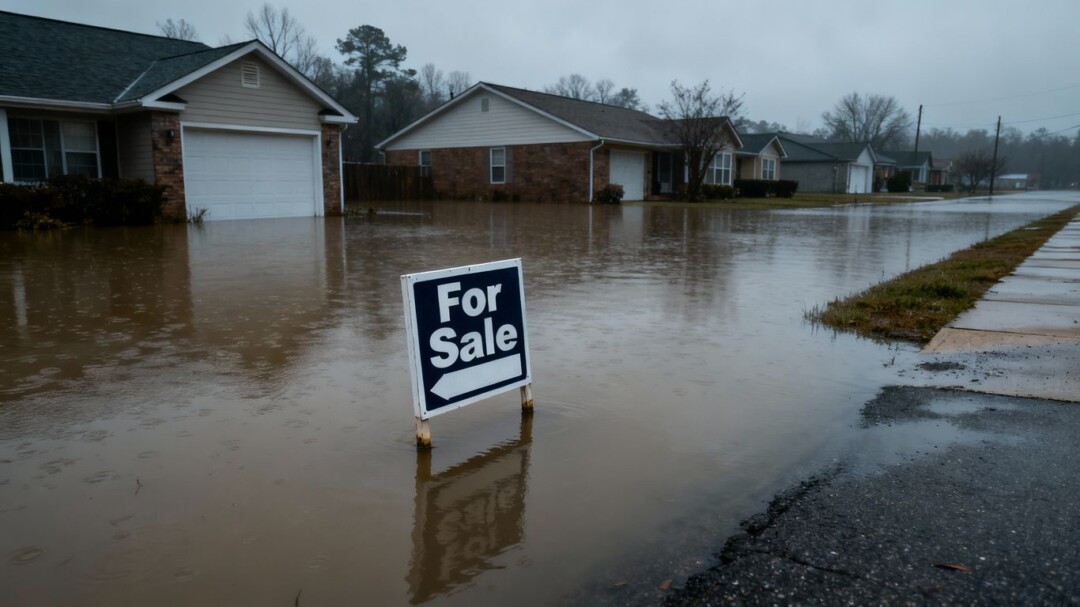
A federal government shutdown has brought the issuance of new flood insurance policies to a standstill, significantly impacting Florida’s real estate market. This halt is delaying or freezing home sales, particularly in flood-prone areas where flood insurance is a mandatory requirement for obtaining a mortgage. The National Flood Insurance Program (NFIP), the primary provider of such policies, is unable to operate, creating widespread uncertainty for buyers, sellers, and lenders across the state.
Key Takeaways
- The federal government shutdown has suspended the National Flood Insurance Program (NFIP).
- New flood insurance policies and renewals cannot be processed, impacting mortgage approvals.
- Home sales in designated flood zones are being delayed or halted.
- While existing policies can be transferred, new buyers may face significant hurdles.
- Florida has a large number of NFIP policyholders, making the state particularly vulnerable.
Impact on Home Sales
The inability to secure new flood insurance policies is a major roadblock for real estate transactions in Florida. Lenders require proof of flood insurance before approving mortgages for properties located in FEMA-designated flood zones. Without the NFIP functioning, banks are hesitant or unable to extend loans, forcing some buyers to scramble for alternative financing, such as cash purchases, or face significant delays.
Tim Weisheyer, Florida Realtors® president, highlighted a case where a buyer had to secure funds from family members to complete a purchase in cash after their mortgage was denied due to the lack of flood insurance. While this is not a common solution, it illustrates the extreme measures some are forced to consider. Many transactions are simply being postponed, causing frustration and financial strain for all parties involved.
The NFIP and Its Limitations
The National Association of Realtors estimates that around 1,400 transactions nationwide could be affected daily by the shutdown. A temporary workaround exists where existing NFIP policies can be transferred to a new owner through an "assignment of policies" process. However, this loophole has a time limit, and after 30 days, current owners can no longer transfer their policies, exacerbating the problem.
While Florida has a small but growing private flood insurance market, these options are often insufficient or unavailable in higher-risk flood zones, which predominantly rely on the federal program. Experts warn that severe weather and flood risks do not cease during a government shutdown, leaving homeowners vulnerable.
Broader Economic Repercussions
The shutdown’s effects extend beyond flood insurance. The Department of Agriculture has suspended new loan programs, and other federal housing agencies are experiencing staffing shortages that could delay processing for mortgage loans and housing assistance. While entities like Fannie Mae and Freddie Mac continue to operate, restricted access to federal data may slow down loan verifications.
Real estate professionals express concern that while short shutdowns might be manageable, a prolonged lapse in government operations could have more severe and lasting consequences on the housing sector. Efforts are underway to urge Congress to reach a resolution or at least pass legislation to reauthorize the NFIP.
Sources
- Shutdown Slows Florida Flood Insurance, Home Sales, | Florida Realtors.
- Impact of Government Shutdown on Real Estate in SWFL | Real Estate, Gulfshore Business.
- Florida real estate could take a hit during government shutdown, Tampa Bay Times.