

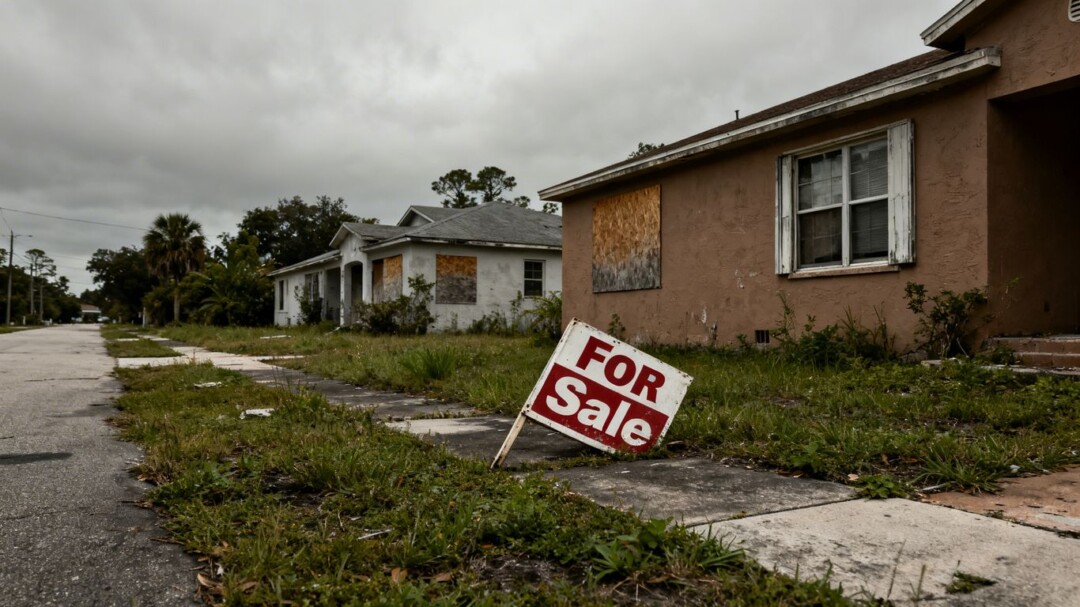
Recent analyses paint a grim picture for Florida’s housing market, revealing it as one of the least favorable in the United States. Factors such as rapidly increasing home prices, rising mortgage rates, and a slowdown in migration have contributed to this downturn, impacting both homeowners and renters across the Sunshine State.
Key Takeaways
- Florida ranks as the second-worst housing market in the U.S., according to a new analysis.
- Renters in Florida face the highest housing costs nationwide, spending over 37% of their income on rent.
- Homeowners are experiencing significant losses in home value, with a median drop of $10,157.
- Several Florida cities are identified as having the worst housing markets among large and mid-sized U.S. cities.
A Deep Dive into Florida’s Housing Woes
A comprehensive real estate analysis by Construction Coverage has placed Florida with the second-worst housing market score in the U.S., only slightly better than Texas. The state received a score of 7.8, a stark contrast to top-ranking states like Connecticut, New Jersey, and Rhode Island. This analysis considers indicators such as how long homes stay on the market, price growth, and bidding activity.
The report highlights that the rapid home price increases, coupled with rising mortgage rates and a return-to-office trend, have diminished the appeal of Florida as a migration destination. Home sales nationwide have seen a decline, and price growth has slowed considerably.
Cities Struggling Amidst Market Downturn
Individual Florida cities are also showing distress. Jacksonville is identified as the worst housing market among large U.S. cities, with Tampa ranking third worst and Miami also appearing in the bottom tier. None of Florida’s major cities made the list of the top 15 hottest markets. The situation is similarly bleak for mid-sized markets, with Cape Coral and St. Petersburg ranking last and second to last, respectively, in the U.S. Other mid-sized Florida cities like Hollywood, Port St. Lucie, and Pembroke Pines also landed in the bottom 15.
Renters Bear the Brunt of High Costs
For renters, Florida’s housing market is the most challenging in the nation. Residents are spending an average of 37.4% of their income on housing, significantly above the national average of 24%. Despite a high number of available rental units and substantial new construction, rent prices have continued to climb by 6.7% year-over-year, with the average monthly rent now at $1,669.
Homeowners Facing Equity Losses
Florida homeowners are also experiencing a decline in their property values. Data from Realtor.com indicates that homeowners lost a median of $10,157 in home value between January 2025 and January 2026. Several metro areas have seen double-digit percentage drops in home values, with Punta Gorda experiencing the largest decline. Experts attribute these drops to a market correction following the pandemic-era buying frenzy and weak housing demand due to high prices.
While the market presents challenges, some experts suggest that the current conditions offer opportunities for buyers seeking more strategic negotiations and fair pricing. However, the overall trend points to a significant cooling and correction in Florida’s once-booming real estate sector.
Sources
- Analysis shows Florida with second-worst housing market in U.S., Florida Politics.
- Florida’s real estate ‘gold rush’ draws the super-rich as rising costs push others out | Florida, The Guardian.
- Florida renters face highest housing costs in the US, mypanhandle.com.
- Florida Homeowners Lost a Median of $10,157 in Home Value Last Year, Realtor.com.