

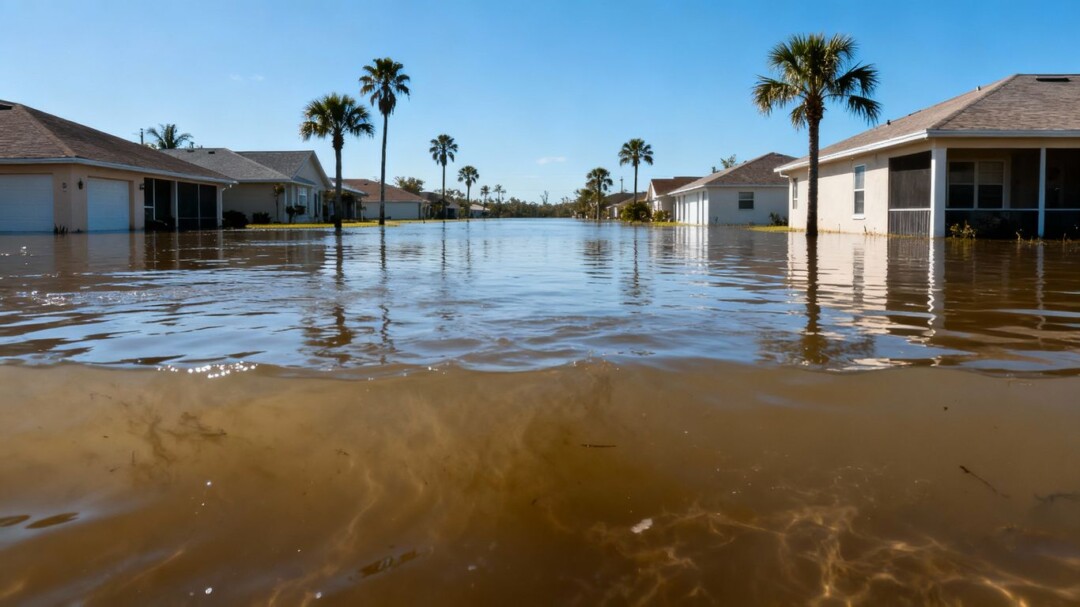
Florida’s booming real estate market is showing early signs of being impacted by climate change, particularly rising sea levels. Research indicates that home sales in areas most vulnerable to inundation began to decline around 2013, with property prices now following a similar downward trend. This suggests a growing awareness among buyers and investors about the long-term risks associated with coastal living in the Sunshine State.
Key Takeaways
- Home sales in Florida’s high-risk coastal areas started falling around 2013, preceding a price decline.
- Prices in these vulnerable areas have begun to diverge and fall compared to lower-risk regions.
- The trend suggests that climate change is quietly impacting the state’s vibrant real estate market.
The Downturn Begins
Research published in late 2020 revealed a significant shift in Florida’s housing market. In areas identified as high-risk for sea-level rise, the annual number of home sales began to drop around 2013. This downturn, which saw sales halve by 2018 in some communities like Bal Harbour, went largely unnoticed for years. The study’s lead author, Benjamin Keys, a professor at the University of Pennsylvania’s Wharton School, noted that this indicates coastal housing is in more distress than previously understood.
Prices Follow Sales
Following the decline in sales volume, property prices in these vulnerable areas have also started to reflect the increased climate risk. Data from Zillow showed that prices in some high-risk zones fell by 7.6 percent between 2016 and 2020. This divergence in pricing between high-risk and low-risk areas suggests that the market is beginning to price in the potential impacts of climate change, such as increased flooding and storm surge.
A Decade of Change
The research analyzed sales data from 2001 to 2020, comparing Census tracts with high inundation risk (where 70 percent or more of developed land could be flooded by a six-foot sea-level rise) to those with low risk. For over a decade, sales in both types of areas grew and fell at similar rates. However, a distinct pattern emerged around 2013, with sales in high-risk areas beginning to decline while sales in low-risk areas continued to perform more robustly. This trend has now extended to prices, signaling a potential climate-driven housing crisis for Florida.
Sources
- Climate change is coming for Florida’s real estate. Why don’t prices reflect it?, Tampa Bay Times.
- Florida Sees Signals of a Climate-Driven Housing Crisis, The New York Times.