

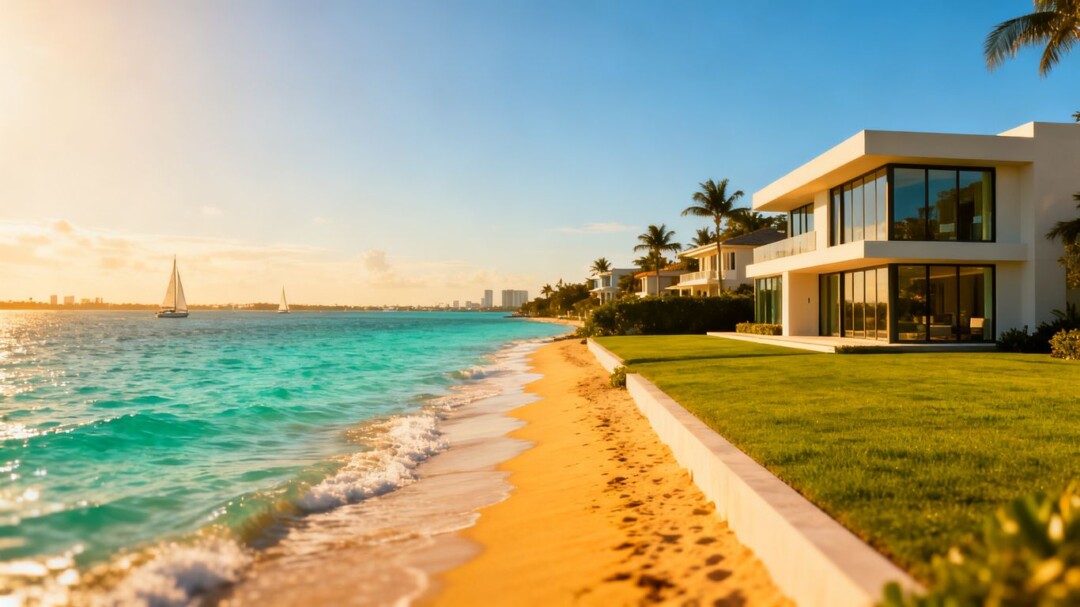
Florida homes are taking longer to sell than they did a year ago, and statewide asking prices have fallen compared with 2024. Key Biscayne, however, is showing a different pattern: recent local data indicate shorter selling times and rising prices, underscoring how sharply housing conditions can vary from one market to another.
Key takeaways
A statewide study found Florida homes averaged 78.1 days on the market in 2026, while Key Biscayne’s average selling time fell to 75 days in the three months through August. Local prices also climbed year over year, in contrast with Florida’s lower average asking price compared with 2024.
- Florida’s average time on market increased 3.6 days from 2025.
- Key Biscayne’s average selling time fell from 100 days to 75 in the period analyzed.
- Key Biscayne’s median sale price rose 4% between the second quarters of 2025 and 2026.
Florida homes are taking longer to sell
A study by Cinch Home Services found homes in Florida spent an average of 78.1 days listed in 2026, up 3.6 days from 2025. Among the 50 states, Florida had the third-longest average time on market, behind Hawaii at 83.9 days and Louisiana at 78.4 days.
The study also found Florida’s average asking price was $424,129, down 6.4%—about $29,100—from 2024. That was the second-largest decrease among the 10 slowest-selling states, behind Hawaii, where asking prices were down 11.2%.
Key Biscayne bucks the local slowdown
In Key Biscayne, homes averaged 75 days to sell in the three months ending in August, compared with 100 days in the same period a year earlier, according to Redfin analysts. Realtor.com data for September showed a median of 97 days on the market in ZIP code 33149, a 10.48% year-over-year decline.
The local price picture was also stronger. Berkshire Hathaway EWM HomeServices’ mid-year report put Key Biscayne’s median selling price at $3.7 million in the second quarter of 2026, up 4% from $3.575 million in the second quarter of 2025. Condo prices rose 6% for listings under $2 million and 19% for those above $2 million. Miami-Dade County’s median sales price increased 2% over the same comparison, from $675,000 to $690,000.
Local conditions matter to sellers
The state and island figures measure different markets and time periods, so they should not be treated as direct comparisons. Still, the contrast illustrates why sellers need to pay attention to nearby listings and recent sales rather than rely on statewide or national trends.
Cinch’s spokesperson advised sellers to compare current local listings, including how long they have been available and whether their prices have changed. Taking care of known repairs and keeping records of work on major systems or appliances may also help buyers feel more confident during viewings.
National markets show mixed patterns
Connecticut and Rhode Island had the shortest average listing period in the study, at 39.4 days. Rhode Island also recorded the largest increase in average asking prices since 2024, up 7.8% to $574,325. The study’s findings suggest that a longer wait to sell does not necessarily mean prices are falling: state-level results varied, reinforcing the importance of local market data.
- Florida homes take longer to sell, but not on Key Biscayne | Real Estate, IslanderNews.com.