

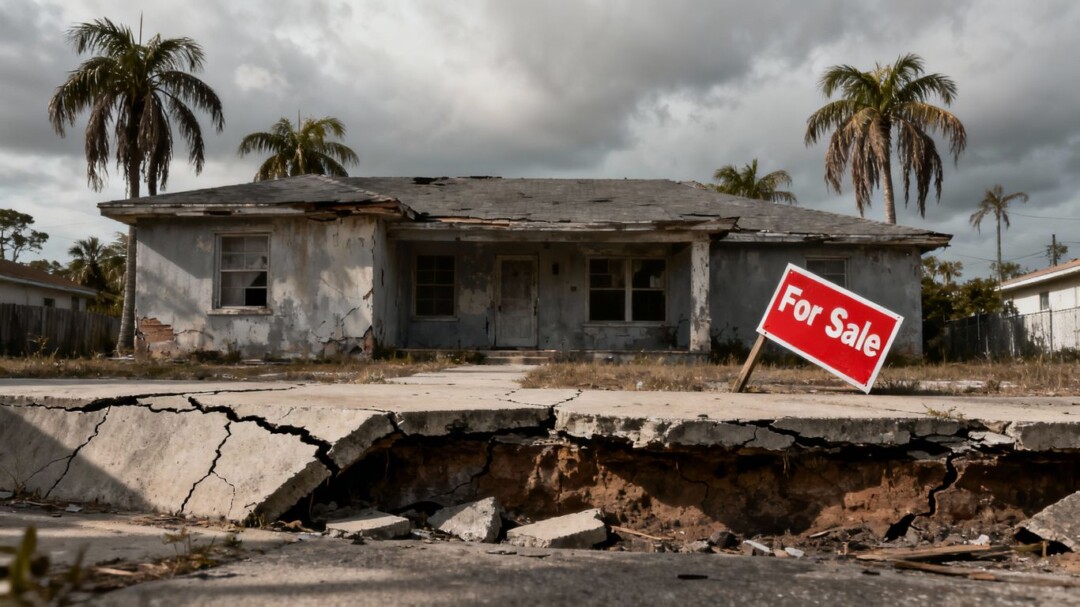
Florida’s once-booming housing market is showing signs of significant weakness, with multiple cities experiencing price drops and extended selling times. Experts are warning of a potential "bubble deflation" that could impact various regions across the state, raising concerns about a broader market downturn.
Key Takeaways
- South Florida, particularly Miami, Fort Lauderdale, and West Palm Beach, is identified as an "epicenter of housing weakness."
- Home prices across Florida have seen a year-over-year decline.
- Several Florida housing markets are experiencing steeper price drops and slower sales than previously thought to be hotspots like Cape Coral.
- A sustained trend of declining prices suggests a shift towards a buyer’s market.
South Florida Leads the Weakness
South Florida is emerging as the epicenter of housing market weakness in the United States. In April, contracts to buy homes in Miami, Fort Lauderdale, and West Palm Beach saw the steepest declines among the 50 largest metro areas nationwide. Pending sales in Miami plunged by 23%, while Fort Lauderdale and West Palm Beach saw declines of 19% and 14%, respectively. Homes are also taking significantly longer to sell, with the median time to sell in these areas more than double the national average.
Broader Price Declines Across Florida
The median home sale price across Florida fell 3.2% year over year in April. This trend has continued, with some reports indicating five consecutive months of price drops in 2025. While the national housing market shows modest growth, specific Florida markets are experiencing more pronounced corrections. For instance, Cape Coral saw home prices drop 7.7% year-over-year in May 2025, with sales also declining and homes taking longer to sell.
Markets Facing Deeper Corrections
Analysis indicates that several Florida housing markets are experiencing worse potential downturns than Cape Coral. In May 2025, the Naples-Immokalee-Marco Island MSA saw a significant 19.2% year-over-year decrease in median sale price, alongside a 15.3% drop in closed sales. Other areas like Punta Gorda MSA (-14.5% price decrease) and Sebastian-Vero Beach MSA (-10.2% price decrease) also show steeper declines than Cape Coral.
Factors Contributing to the Downturn
Several factors are contributing to the cooling housing market in Florida. Elevated mortgage rates continue to price out potential buyers, while economic uncertainty and inflation worries make consumers cautious about large investments. An increase in housing inventory across the state also shifts the balance towards buyers, leading to more negotiation power and downward pressure on prices. Furthermore, some coastal areas face challenges related to rising insurance costs and vulnerability to natural disasters.
Outlook for Mid-2026
Projections suggest that around 24 Florida housing markets could see home prices drop by mid-2026. Markets like Punta Gorda, North Port, and Cape Coral are expected to experience notable price moderation. While this indicates a shift from the rapid appreciation of recent years, experts view it as a healthy market adjustment towards greater balance and sustainability, rather than an outright crash.
### Key Takeaways
- This 1 part of
Florida is emerging as America’s ‘epicenter of housing weakness’ — expert warns of
‘really long’ bubble deflation. Will it spread to the rest of the US?, Moneywise. - Why is Cape Coral Housing Market in Florida Doomed to Crash in 2025?, Norada Real Estate Investments.
- 4 Florida Housing Markets Facing Worse Potential Crash Than Cape Coral, Norada Real Estate Investments.
- Florida Housing Prices Drop for the Fifth Consecutive Month in 2025, Norada Real Estate Investments.
- 24 Florida Housing Markets Could See Home Prices Drop by Mid 2026, Norada Real Estate Investments.