

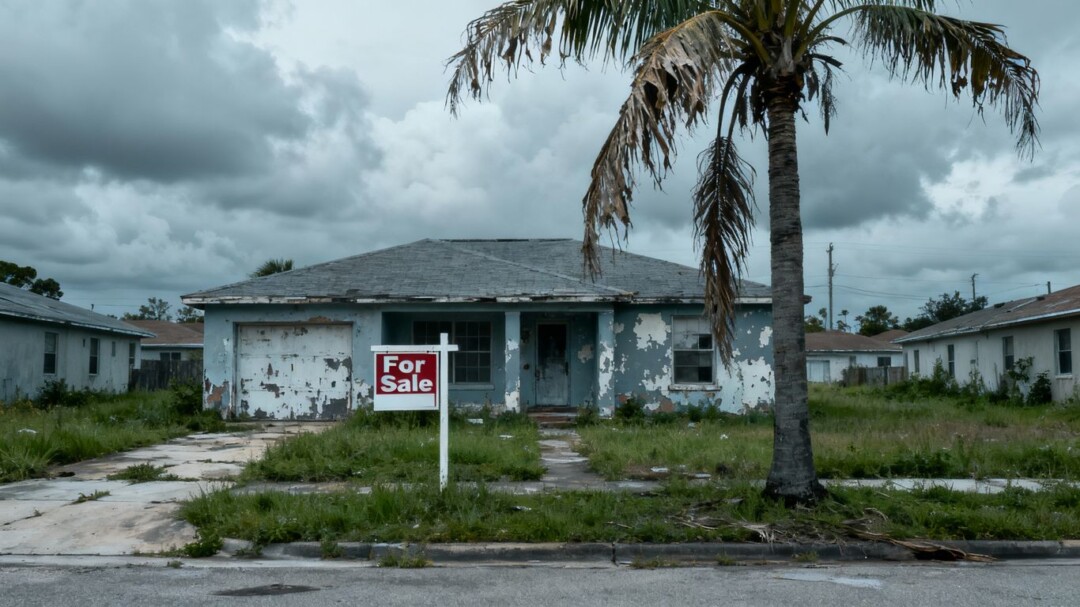
Miami and other major Florida metropolitan areas are facing significant housing market risks, with affordability reaching new lows and vacancy rates climbing. A recent UBS Global Real Estate Bubble Index has once again ranked Miami as the riskiest housing market globally, citing a substantial and sustained mispricing of homes. This situation is exacerbated by soaring mortgage rates, insurance costs, and a widening gap between median incomes and home prices.
Key Takeaways
- Miami has been named the world’s riskiest housing market for the second consecutive year by UBS.
- Six of the top U.S. metro areas with the highest residential vacancy rates are in Florida.
- Housing affordability in Miami has declined significantly, with residents spending over 36% of their income on home costs.
- The ongoing federal government shutdown is creating further uncertainty and potential disruptions in Florida’s housing sector.
Miami’s Bubble Risk
For the second year in a row, Miami has topped UBS’s Global Real Estate Bubble Index. The report defines a bubble as "a substantial and sustained mispricing" of homes. While not a prediction of an immediate collapse, the risk levels are considered higher. Median single-family home prices in South Florida have surged by at least 70% since the summer of 2019, far outpacing the national median increase of 50% over the same period. Despite a slowdown in price growth and an increase in housing inventory, affordability remains a major concern, with rising mortgage rates and insurance costs pushing potential buyers away.
Soaring Vacancy Rates Across Florida
A study by Lance Surety Bonds revealed that six of the top U.S. metro areas with the highest residential vacancy rates are located in Florida. Cape Coral and Fort Myers lead the nation with a 38.7% vacancy rate, followed by North Port-Bradenton-Sarasota (23.7%), and Tampa-St. Petersburg-Clearwater (13.3%). While some areas like Orlando and Sarasota have seen a decline in vacancies, indicating potential increased demand, the overall trend highlights a significant number of empty properties across the state. This issue extends to commercial real estate, with Orlando, Tampa, and Miami also ranking high for office space vacancies.
Affordability Crisis Deepens
An analysis by SmartAsset identified Miami as the city with the least affordable housing in the U.S., where residents spend an average of 36.02% of their income on housing costs, significantly above the recommended 30% threshold. This lack of affordability is a nationwide issue, with many Americans struggling to keep up with mortgage or rent payments. The median sale price of a U.S. home has increased by nearly 30% in five years, while national median rent has climbed over 32% between 2020 and 2024.
Government Shutdown Adds Uncertainty
The ongoing federal government shutdown is further complicating the situation in Florida, a state where real estate constitutes a significant portion of the gross domestic product. Delays in flood insurance renewals, environmental permits, and federal loan programs are creating uncertainty for builders and buyers alike. With Florida being highly susceptible to flooding and holding a large number of federal flood insurance policies, the inability to renew coverage during hurricane season poses a substantial risk. This policy uncertainty could accelerate the cooling of the housing market, potentially foreshadowing a broader slowdown in the national housing data.
Sources
- ‘The risk levels are higher’: Miami is the number one housing market bubble in the world – again, WLRN.
- Major bank flags southern US city as the world’s biggest real estate bubble risk, as metrics top 2006 housing
levels, Yahoo Finance. - This Florida hot spot has
the country’s least affordable housing — with residents paying more than 36% of income
on home costs. Are you being squeezed?, MoneyWise.com. - Six largest Florida metro areas post highest vacancy rates among U.S. housing markets, Florida Politics.
- Florida’s housing market is flashing a warning for the rest of the US, Daily Mail.