

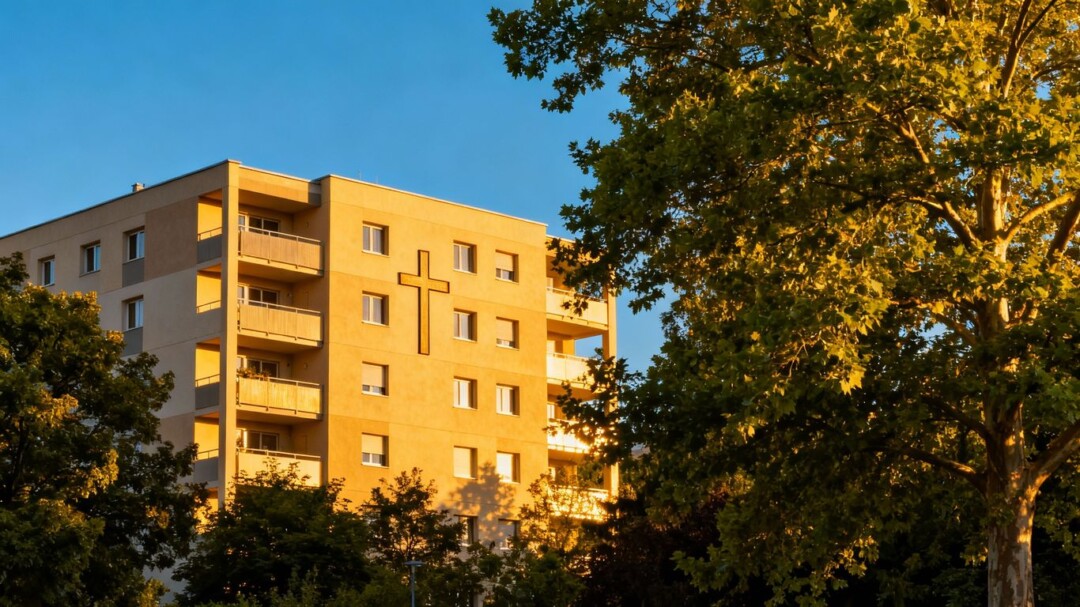
Across the United States, a growing movement called "Yes in God’s Backyard" (YIGBY) is exploring the potential of converting underutilized church land into much-needed affordable housing. This initiative seeks to leverage the vast landholdings of faith-based organizations to address the nation’s housing crisis, with several states already enacting legislation to facilitate these developments.
Key Takeaways
- Several states are passing "YIGBY" legislation to allow affordable housing on religious land.
- This movement aims to address the housing shortage by utilizing unused church properties.
- Concerns exist regarding local zoning control and potential discrimination.
- Examples from Florida, California, and Wisconsin showcase both progress and challenges.
The YIGBY Movement Gains Momentum
The "Yes in God’s Backyard" (YIGBY) movement is gaining traction as a novel approach to tackling the affordable housing shortage. The core idea is to utilize land owned by religious institutions, which often have significant, sometimes underused, parcels, to build new housing. This initiative is driven by a dual mission: fulfilling a religious calling to serve the community and providing practical solutions to housing insecurity.
Florida recently enacted a law, sponsored by State Sen. Alexis Calatayud, that permits multifamily residential development on land owned by religious institutions, provided at least 10% of the new units are affordable. This measure is estimated to potentially unlock around 30,000 parcels statewide. California pioneered this approach in 2023 with a law allowing churches and nonprofit universities to develop affordable housing on their land, with a requirement that at least 75% of the homes be affordable for low-income households. Other states like Arizona, Colorado, Kentucky, Massachusetts, Minnesota, New York, and Texas have considered similar legislation.
Challenges and Concerns
Despite the promising potential, the YIGBY movement faces hurdles. Skeptics raise concerns about ceding local control over zoning decisions and the potential for religious landowners to bypass fair housing protections. In Colorado, for instance, local governments worried that proposed YIGBY legislation could undermine their home-rule authority and potentially lead to discrimination against housing applicants who do not share the same faith. The Colorado bill ultimately failed to pass the Senate.
Furthermore, the economic realities of construction, including rising costs and interest rates, present significant challenges for faith-based organizations embarking on housing projects. The Rev. Peter Beeson of St. John’s Lutheran Church in Madison, Wisconsin, shared that their project to build affordable apartments alongside a new worship space has faced setbacks, with the process taking longer than anticipated.
Finding Common Ground
Experts like the Rev. Patrick Reidy, an associate professor of law at Notre Dame, emphasize the need for collaboration and understanding between state and local governments and faith-based organizations. He notes that while faith leaders are motivated by a moral mission, they often require assistance with financing, zoning, and legal expertise to navigate housing development. "The real challenge is learning to speak each other’s language," Reidy stated.
Cities like Atlanta are actively partnering with financial institutions to guide faith-based organizations through the development process. Mayor Andre Dickens highlighted that churches are often situated on prime, underutilized land, and their inherent mission can provide stability against market pressures. Local initiatives in places like Atlanta, Montgomery County, Maryland, and Seattle are also demonstrating success in creating affordable housing through similar policies.
A Glimpse of the Future
The potential for faith-based land to contribute to affordable housing is vast. In North Carolina, a Presbyterian church converted an unused education wing into 21 housing units, and an Episcopal church built three tiny homes for formerly homeless residents. These smaller-scale projects, while successful, highlight the need for YIGBY laws to potentially ease affordability requirements for smaller developments to ensure they can get off the ground. The future of the YIGBY movement may lie not just in large-scale developments but also in creating small, intentional communities that blend seamlessly with their surroundings.