

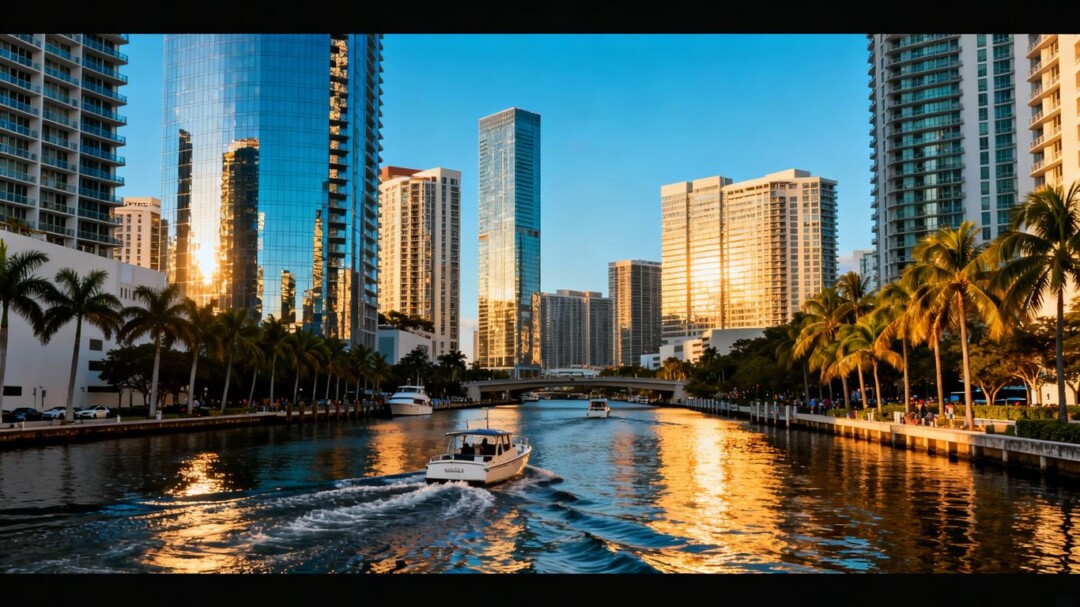
Downtown Fort Lauderdale is experiencing unprecedented economic growth, now boasting an annual economic impact of $43 billion, a significant 44% increase since 2019. This vibrant urban core has become a major economic engine for the region, demonstrating a remarkable expansion that surpasses the economic contributions of both the Fort Lauderdale-Hollywood International Airport and Port Everglades.
Key Takeaways
- Downtown Fort Lauderdale’s economic footprint has surged to $43 billion annually, a 44% increase since 2019.
- The area’s growth is driven by professional services like finance, healthcare, and real estate, rather than traditional tourism.
- A significant increase in residential development, including apartments and condominiums, is fostering a vibrant live-work-play environment.
- Challenges remain, including affordability, infrastructure concerns, and the need to retain young professionals and their families.
A Thriving Economic Hub
Walter Duke, president of his own commercial real estate valuation firm, led a study for the downtown development authority that revealed the impressive economic figures. Duke described the downtown area as a "real powerhouse," packed into a 2.2 square mile site. The $43 billion economic impact significantly outpaces the $28.1 billion generated by Port Everglades in 2024, which itself saw a 13% decrease since 2019.
The strategic location of downtown, forming a "golden triangle" with the airport and seaport, creates significant synergy and economic output. This proximity to major travel and trade centers is a key factor in the area’s growing economic prowess.
Shifting Employment Landscape
Contrary to expectations, downtown Fort Lauderdale’s job growth is not primarily fueled by the hospitality and tourism sectors. Instead, professional service industries such as finance, healthcare, and real estate are leading the charge in attracting workers. Even with the presence of city and county governments, only one in fourteen downtown workers is a government employee.
Residential Boom Fuels Vibrancy
A substantial increase in apartments and condominiums has transformed downtown Fort Lauderdale into a desirable live-work-play environment. Unlike many traditional downtowns dominated by office buildings, Fort Lauderdale’s majority consists of multi-family residential buildings, contributing to its vibrant atmosphere. This residential growth underpins the expanding economic activity.
While Fort Lauderdale ranks high for renter interest, with average rents around $2,700, condo prices have also risen. The median condo price reached $755,000 in the second quarter, a 10% increase year-over-year, despite a 30% drop in sales pace. This presents affordability challenges for downtown workers seeking to live in the area.
Future Challenges and Opportunities
The report also highlights that Fort Lauderdale is successful in attracting younger workers, with four in ten being early to mid-career employees. However, this success brings the challenge of retaining these young residents as they start families, raising questions about future school capacity. Infrastructure remains a concern, with past issues like sewer pipe breaks and the significant risk of flooding for a large percentage of downtown properties.
Economic uncertainty and state-level audits of local government spending add another layer of complexity to the region’s outlook. Despite these challenges, downtown Fort Lauderdale’s economic trajectory points towards continued growth and development.