

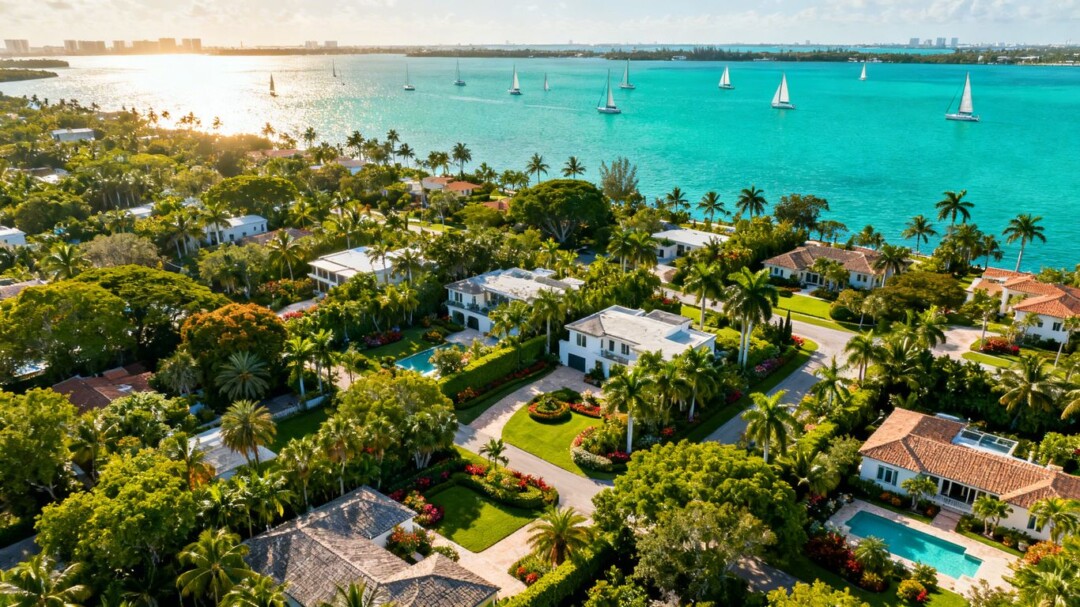
The Coconut Grove real estate market in the first quarter of 2026 shows a shift from its pandemic-fueled frenzy to a more analytical and segmented environment. While demand remains robust, buyers are now more discerning, leading to a clearer differentiation between properties commanding premium prices and those requiring adjustments. This evolving market rewards long-term ownership over short-term speculation.
Key Takeaways
- The market has cooled from its pandemic peak but remains strong, particularly in the sub-$3 million segment.
- Pricing is no longer uniformly increasing; the market is clearly dividing between high-demand, premium properties and others.
- Limited supply persists, though new construction projects are on the horizon.
- Turnkey, well-finished properties are leading the market, while renovation projects are losing momentum.
- Many sellers are still pricing based on previous market highs, not current realities.
- Coconut Grove’s lifestyle appeal is a premium, but buyers compare it to neighboring areas.
- Higher interest rates have shifted the buyer demographic rather than halting activity.
- Hidden risks, such as flood zones and older building issues, require careful consideration.
- Attempting to time the market can be a costly strategy; long-term ownership is favored.
- The market rewards long-term owners, not short-term speculators.
Market Dynamics: A Tale of Two Halves
The Coconut Grove market, while generally stable, exhibits distinct behaviors across different price points. Properties below $3 million represent a seller’s market, characterized by low inventory and high demand, with an average of 83 days on the market. The $3 million to $6 million range is more balanced, with listings taking an average of 139 days to sell, emphasizing the need for realistic pricing. Above $6 million, properties typically take longer, averaging 285 days on the market, though exceptions exist for highly desirable units or homes in prime locations.
Overall inventory suggests a balanced market leaning towards sellers, with approximately 6.5 months of supply.
Pricing Trends and Property Types
While the top of the market, particularly in luxury condominiums like One Park Grove and the upcoming Four Seasons Residences, continues to push price-per-square-foot records (approaching $4,000 per square foot), the broader market has seen a slight pullback. The condo market averaged $1,672 per square foot in 2024, with a minor decrease in 2025. Similarly, single-family homes saw a slight dip in average price per square foot. This indicates a market readjustment where realistic sellers are gaining traction, while exceptionally finished homes in prime locations continue to set new benchmarks.
Turnkey properties with custom finishes and meticulous attention to detail are in high demand and sell quickly. Conversely, properties requiring significant renovation are losing momentum. Land, often meaning a tear-down opportunity, remains highly sought after for those looking to build custom homes.
Supply and Future Outlook
Supply for single-family homes remains constrained due to high buyer demand and limited new construction opportunities. The condo market will see a modest influx of new inventory between 2026 and 2028, with projects like the Four Seasons and The Well Coconut Grove adding fewer than 400 units. This is unlikely to significantly alter the tight inventory situation, suggesting continued strength in the condo market.
Buyer Behavior and Market Nuances
Higher interest rates have not deterred buyers but have shifted the profile of who is actively purchasing. Serious, long-term buyers are driving the market, especially in the sub-$3 million segment. While buyers in the $3 million to $6 million range are more cautious, those in the luxury segment ($6 million+) are less sensitive to rates, often utilizing cash or private banking options for financing.
Buyers considering Coconut Grove also evaluate neighboring areas like Coral Gables, High Pines, South Miami, and Pinecrest. While Coconut Grove offers a unique lifestyle, buyers seeking larger lots and homes may opt for properties in areas like Ponce Davis or South Miami, where the price per square foot can offer more value.
Navigating Risks and Long-Term Strategy
Potential buyers must be aware of hidden risks, including flood zones, proximity to busy roads, and the condition of older homes, particularly concerning unseen renovations like electrical and plumbing. For condominiums, especially those built before 2000, scrutinizing special assessments, building certifications, and reserve funds is crucial.
The report emphasizes that waiting for the "perfect moment" to buy is often a costly strategy in stable markets like Coconut Grove, where long-term appreciation is expected. For sellers, timing and accurate pricing are key, with winter months typically seeing more seasonal buyer activity. Ultimately, the Coconut Grove market rewards long-term owners who value its lifestyle and enduring appeal over short-term speculative gains.