

Ken Griffin’s reported commitment of more than $4 billion to a Carnegie Mellon University campus and its Wynwood site is drawing attention to Miami’s neighboring Edgewater. The project could add students, faculty and technology-sector jobs nearby. But any boost to condo demand will depend on which buildings attract residents—and on how the campus and surrounding development take shape.
Key takeaways
- The reported commitment combines a $3 billion gift to Carnegie Mellon with a roughly $1.1 billion purchase of Wynwood land.
- Edgewater is about five minutes from the planned campus, which is expected to open around 2028.
- The neighborhood’s condo market is uneven: newer waterfront buildings generally command stronger prices than older or rental-heavy properties.
- New demand may help, but it does not guarantee rising values for every condo.
What Griffin’s investment involves
According to the real estate market report, Carnegie Mellon announced Griffin’s $3 billion gift for a 35-acre Miami campus, while Griffin separately acquired the Wynwood land for about $1.1 billion. The combined figures explain the “more than $4 billion” headline, though the gift and land purchase are distinct components—not a single campus construction budget.
The report says the university anticipates about 3,500 students and 900 faculty members, with classes expected to begin around 2028. Those figures point to potential future housing demand, but the campus timeline and its eventual enrollment and hiring will matter.
Why Edgewater could benefit
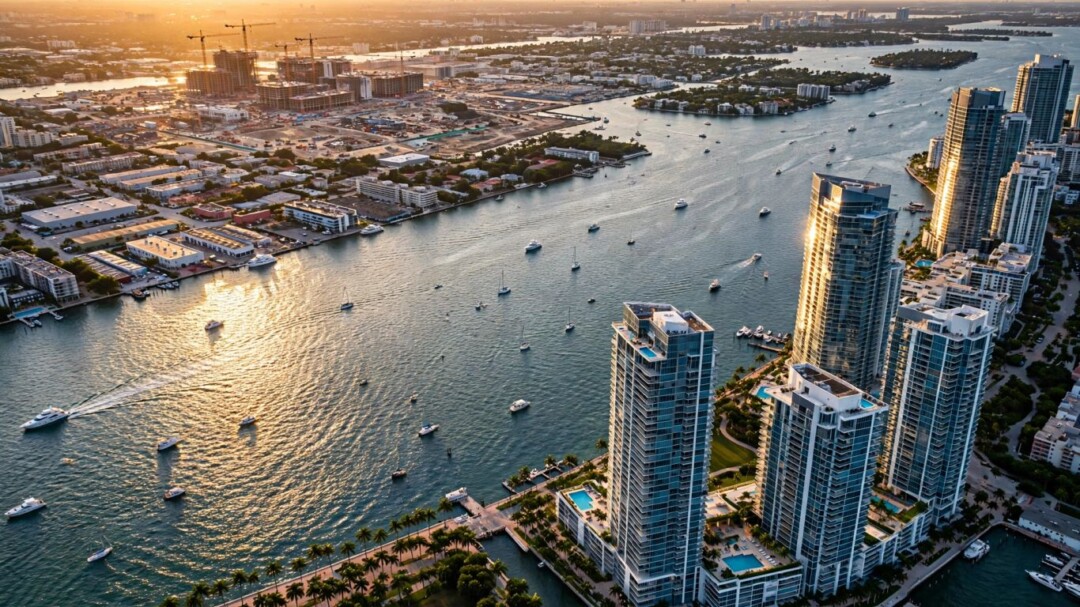
Edgewater sits between Downtown Miami and Midtown, close to Wynwood and the bay. The report’s authors argue that faculty, university families and employees of technology and creative companies could add to the area’s pool of prospective residents. Parents seeking housing near a student and professionals wanting a short commute may be part of that demand.
The neighborhood is also seeing activity from office tenants and other development, according to the report. Still, economic growth nearby does not automatically translate into condo purchases: some new residents may rent, live elsewhere or arrive gradually as projects open.
The condo market is divided
The report says closed sales of Edgewater condos priced at $1 million or more rose 32% from Jan. 1 through Sept. 3, 2026, compared with the same period in 2025. It puts the average sale price at $968 per square foot, while top resale properties can reach roughly $1,300 to $1,400 per square foot. New developments are asking about $1,800 or more per square foot.
Those neighborhood-wide figures can obscure major differences. Newer bayfront buildings such as Elysee, Paramount Bay and Biscayne Beach are identified by the report as stronger performers. By contrast, some older buildings face costly recertification work and assessments; rental-heavy properties may also have different resale prospects than buildings dominated by full-time residents.
What condo owners should watch
For owners, Griffin’s move is best viewed as a possible long-term demand driver, not a promise of appreciation. Building condition, association finances, assessments, rental mix, unit layout and view can all shape value independently of nearby headlines. Limited new supply could support well-positioned properties, but construction delays, changing market conditions or weaker-than-expected campus growth could temper the effect.
The practical takeaway is to assess a condo on its own merits. A nearby university may strengthen Edgewater’s appeal over time, but it will not erase the differences between a well-maintained waterfront tower and an older building facing substantial costs.