

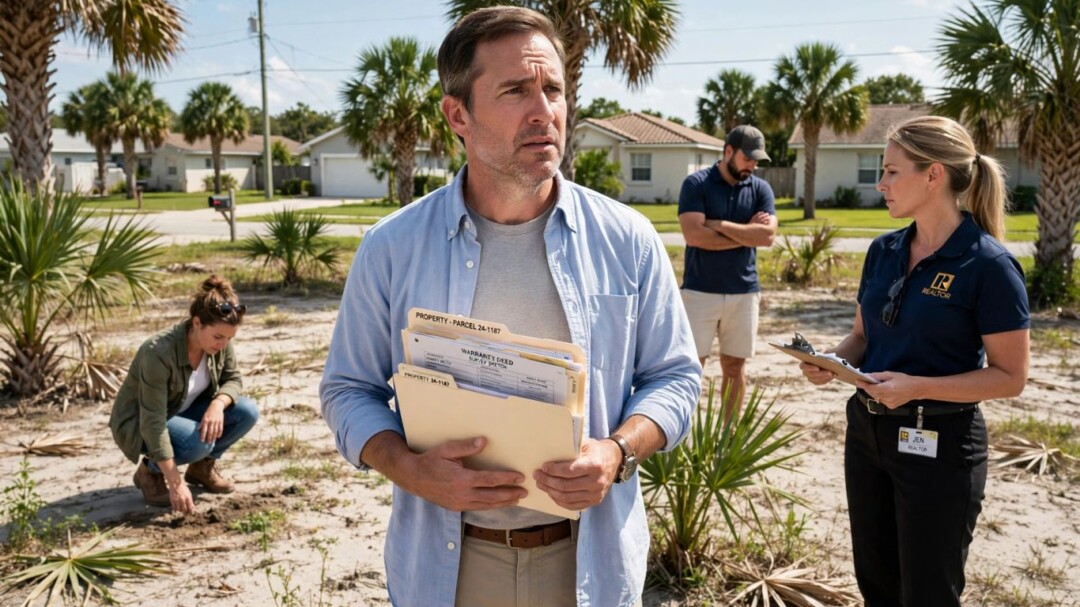
A Florida landowner says two attempted sales of his vacant lots were stopped after strangers allegedly posed as him. One deal was reportedly just three days from closing when the supposed buyer contacted him. The incidents underscore how property scams can target land that owners may not be actively monitoring or listing.
Key takeaways
- Thomas Tafelski says he never put his Pinellas County lots up for sale.
- An agent canceled one attempted sale; a second deal was canceled shortly before its scheduled closing.
- Sellers who avoid direct contact or push for a fast, unusually cheap sale may warrant extra scrutiny.
The reported attempts involved someone allegedly impersonating the owner, rather than breaking into or taking physical possession of the land.
Two attempted sales were stopped
Tafelski told WFLA News Channel 8 that he has owned the vacant lots near Tampa for 27 years and hopes to develop them as rental properties. He said he was surprised when a real estate agent contacted him about selling land he had never listed. After he clarified that the lots were not for sale, the agent canceled the transaction.
Weeks later, Tafelski received a call from someone who said they had agreed to buy the lots and shared paperwork indicating that closing was set for three days later. That transaction was also canceled, according to the report.
How seller impersonation can work
In this type of fraud, a scammer claims to be a property owner and tries to persuade an agent or buyer to proceed with a sale. Vacant land may be an appealing target because it can go for long periods without a visit from its owner, making suspicious activity less likely to be noticed right away.
The incidents described in Florida were stopped before the lots changed hands. The report does not say how the alleged impersonators obtained or presented information about the properties, or whether anyone was charged.
Warning signs and ways to respond
The FBI has warned that property fraud attempts may involve sellers who communicate only through email, text or internet-based phone services, avoid meeting in person, or press for a quick transaction. A price well below market value can also be a reason to investigate further.
Owners can check their property records periodically and make sure contact details with relevant local offices are current. Buyers and real estate professionals should verify a seller’s identity and authority to transfer a property using reliable, independently obtained information, rather than relying solely on documents or contact details supplied during a transaction. If something seems inconsistent, pausing the deal and seeking further verification may help prevent a fraudulent sale.