

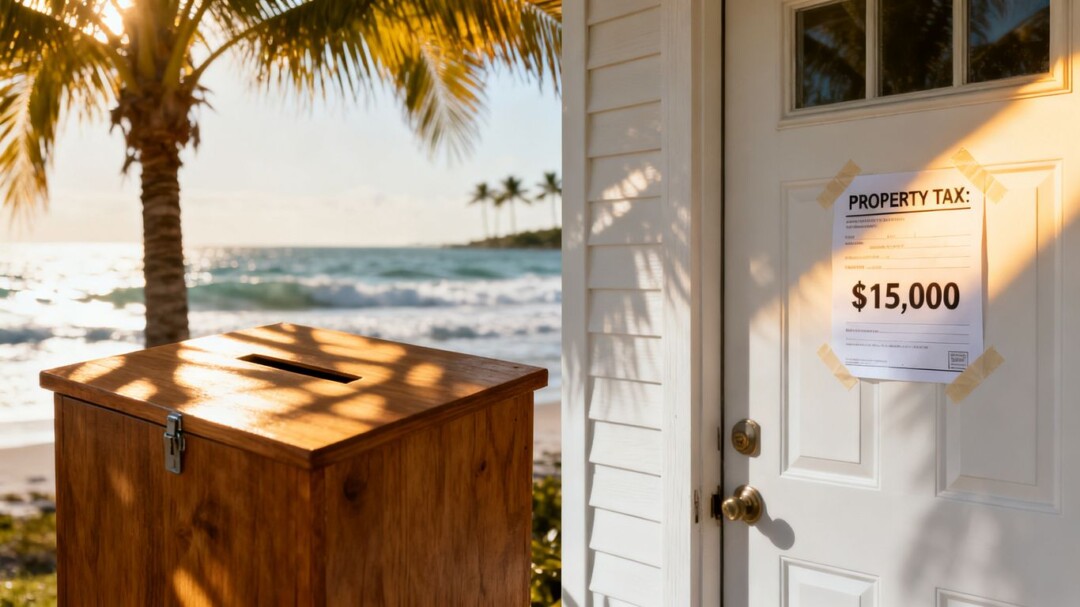
Florida voters will decide this November whether to dramatically increase the state’s homestead exemption to $250,000, a move that could eliminate property taxes for homes valued below that amount. While advocates celebrate the proposal as vital relief for working-class families, local government leaders fear the resulting revenue loss will compromise critical community services.
Key takeaways
- A proposed constitutional amendment would raise the homestead exemption to $250,000, requiring 60% voter approval to pass.
- Governor Ron DeSantis has signed SB 4-F, a companion law that places stricter limits on how local governments can raise property tax millage rates.
- Critics, organized under the "Vote No on 3" committee, argue the plan could drain billions from budgets, potentially causing a tax shift that impacts renters and small businesses.
- Proponents contend the measure addresses years of rising property values and keeps government spending in check.
The heart of the property tax debate
At the core of the conflict is a disagreement over the financial sustainability of local municipalities. Supporters of the amendment, including state officials, argue that local governments have expanded their spending too rapidly and should be forced to find efficiencies. By inflating the homestead exemption, backers aim to provide immediate, tangible savings for homeowners who have struggled under the weight of ballooning tax bills.
However, opponents argue that the reduction in revenue will not magically disappear; it will instead create a fiscal void. Because local governments rely heavily on property taxes to fund public safety, infrastructure, and emergency services, critics warned that the tax burden could shift to other areas, such as rent costs or municipal fees, effectively transferring the financial weight from homeowners to the broader population.
Legislative action and future oversight
The push for tax relief has been accompanied by new legislative measures signed by Governor DeSantis. The recently enacted SB 4-F specifically targets local tax collection by:
| Mechanism | Change |
|---|---|
| Millage Rate Threshold | Limits ability to raise rates without supermajority votes |
| Income-Growth Adjustment | Removes automatic adjustments based on per-capita income |
| Budget Transparency | Requires online posting of budget data and projections |
This law serves as a backstop, ensuring that even if the amendment passes, local governments face increased hurdles if they attempt to offset lost revenue by raising tax rates. Additionally, new mandates for transparency will require local entities to prove their financial needs more clearly by posting detailed, historical budget reports online.
Concerns over local government funding
Many local officials are bracing for a difficult future. Fire districts, law enforcement agencies, and other special districts that do not receive general government funding are particularly vulnerable. Leaders of these departments have expressed alarm, noting that even if the state attempts to backfill shortages, the lack of a guaranteed, permanent funding pool makes long-term planning for essential services, such as emergency response and public safety, increasingly precarious. As the November election approaches, the fundamental debate remains: can the state provide tax relief without undermining the institutions that keep communities functioning?
Sources
- Voters to decide fate of property tax exemption increase in Florida as group forms in opposition, Gulf Coast News and Weather.
- DeSantis signs companion measure to Florida property tax cut, Tallahassee Democrat.
- Vote No on 3 launches fight over Florida property tax overhaul, Tallahassee Democrat.
- Billions at stake: Florida property tax proposal heads to voters | State, WINK News.
- Gov. Ron DeSantis signs new Florida property tax law. Here’s what to know, WKMG.