

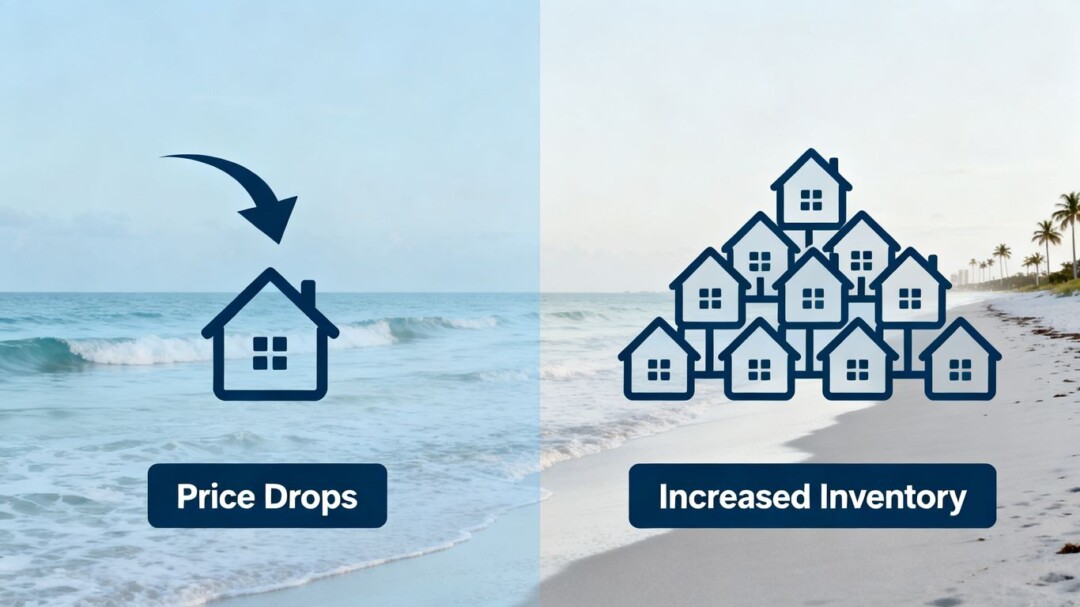
Florida’s housing market is experiencing a complex period, with some reports highlighting price drops and increased foreclosures, while others point to a resilient market with rising sales and near-record median prices. Experts suggest that current market conditions are a correction from the unsustainable boom of the COVID-19 era, rather than a full-blown crisis.
Key Takeaways
- Despite national concerns, Florida’s housing market saw a rise in home sales and a strong median price in March.
- Foreclosure filings have increased year-over-year but remain a small fraction of 2010 levels.
- Price reductions are often a correction from inflated asking prices.
- Inventory has grown, but population growth has kept pace, preventing a significant oversupply.
- The market is shifting towards a more balanced, buyer-leaning environment.
Debunking Market Myths
Recent national reports have painted a grim picture of Florida’s housing market, citing "plummeting demand" and prices "dropping hard." However, data from Florida Realtors indicates a different reality. In March, single-family home sales rose 5.9% year-over-year, with a median sale price of $420,000. Experts like Brad O’Connor, chief economist for Florida Realtors, argue that while challenges exist, plummeting demand is not one of them.
Foreclosure Filings and Oversupply Concerns
While foreclosure filings have seen a year-over-year increase, they represent a small percentage of the state’s housing units. Compared to the 2010 housing crash, when one in five homes faced foreclosure, current numbers are significantly lower. Concerns about an oversupply of housing are also being re-evaluated. Although active listings have increased since 2019, Florida’s population growth has largely mirrored this increase. Furthermore, inventory levels for single-family homes and townhouses/condos have actually declined compared to the previous year.
Price Adjustments and the COVID-19 Boom
Reports of significant price drops often stem from comparing current prices to the peak of the unsustainable COVID-19 housing boom (mid-2020 to late 2022). During this period, median sale prices saw double-digit percentage increases for 28 consecutive months. Today, some sellers still list homes with unrealistic expectations, leading to price reductions. However, many homes that are well-maintained and priced appropriately are still selling quickly. Real estate agents emphasize that price reductions are often corrections from inflated asking prices rather than a sign of a market crash.
A More Balanced Market Emerges
The Florida real estate market is transitioning towards a more balanced environment. While not at the fever pitch of a few years ago, buyer demand is rebuilding, allowing buyers more time to make informed decisions. In some areas, like Central Florida, the market is leaning towards buyers, with increased inventory and stabilizing mortgage rates. However, in desirable locations, a seller’s market can still persist. Experts advise buyers to secure pre-approval and sellers to price their homes realistically to navigate the current landscape effectively.
Future Outlook
Experts do not foresee a market crash. Instead, they anticipate an adjustment from the unusual period of the COVID-19 housing boom. While foreclosures are up year-over-year, they remain historically low. The market is expected to level out rather than swing wildly, reflecting a healthier, more sustainable real estate environment.
Sources
- Housing market in Florida show positive picture despite reports, Daytona Beach News-Journal.
- Home prices dropped in dozens of big U.S. cities this year. Here’s where., CBS News.
- Florida real estate market for condos may rebound here, Treasure Coast News.
- Central Florida’s real estate market outlook ahead of summer, Spectrum News 13.
- Florida Homes Selling at $100K Discount as Prices ‘Dropping Hard’, Newsweek.