

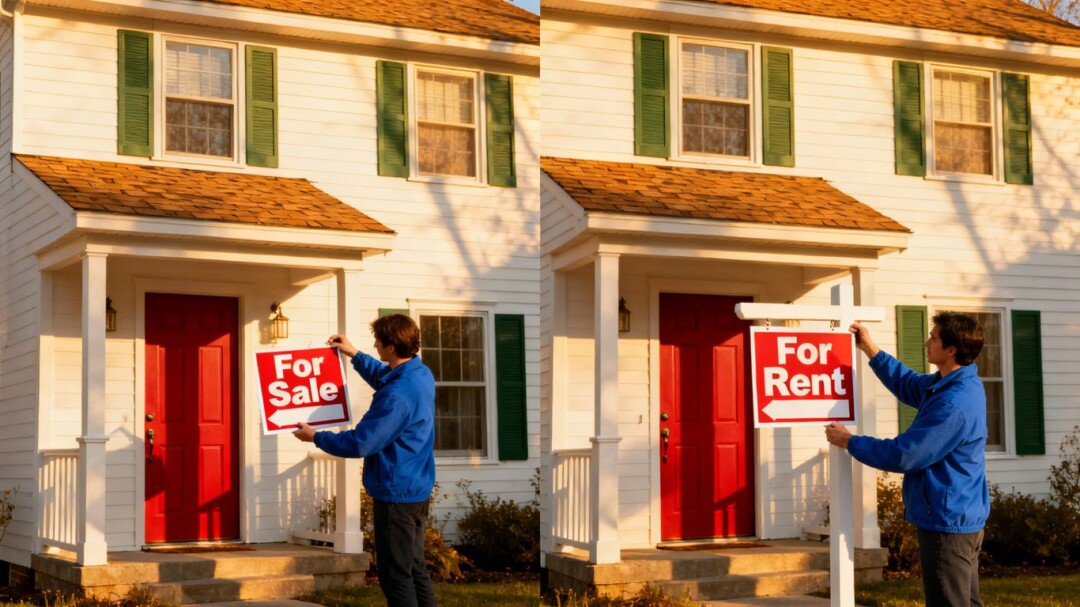
A growing number of homeowners are choosing to rent out their properties rather than sell, a trend that has pushed the percentage of rental listings previously offered for sale to 2.3%, according to a recent Zillow report. This figure is nearing a three-year high, indicating a significant shift in the real estate market dynamics.
Key Takeaways
- 2.3% of rental listings on Zillow were recently listed for sale, close to a six-year high.
- Detached single-family homes are the most common type of property being transitioned to rentals.
- Denver leads metropolitan areas with the highest percentage of homes moving from sale to rental listings.
- This trend suggests homeowners are not under immediate financial pressure to sell and are seeking to gain time in a buyer-favoring market.
The Rise of the ‘Accidental Landlord’
The report highlights that homeowners are increasingly becoming "accidental landlords," a term used for those who rent out a property after failing to find a buyer at their desired price. This strategy allows them to "buy time" rather than aggressively lowering prices in a market that is tilting towards buyers. Detached single-family homes represent the largest segment of these properties, accounting for 3.4% of rental listings that were previously on the market for sale. Townhomes and condominiums follow at 2.2% and 1.1%, respectively.
Market Variations and Seller Sentiment
Certain real estate markets are experiencing this phenomenon more acutely than others. Denver reported the highest share of homes switching from the for-sale market to rentals, at 4.9%. Other cities with significant numbers include Houston, Austin, San Antonio, Portland, Tampa, Miami, Dallas, Jacksonville, and Nashville.
Kara Ng, senior economist at Zillow, commented on the situation, stating, "As the market continues to rebalance, sellers are facing a different reality than they did a few years ago. Bargaining power is tilting toward buyers and homes are taking longer to sell, making renting out a property one way to buy time rather than compete aggressively on price." She added that most sellers are not compelled to sell due to financial distress and are often unwilling to compromise on their perceived home value.