

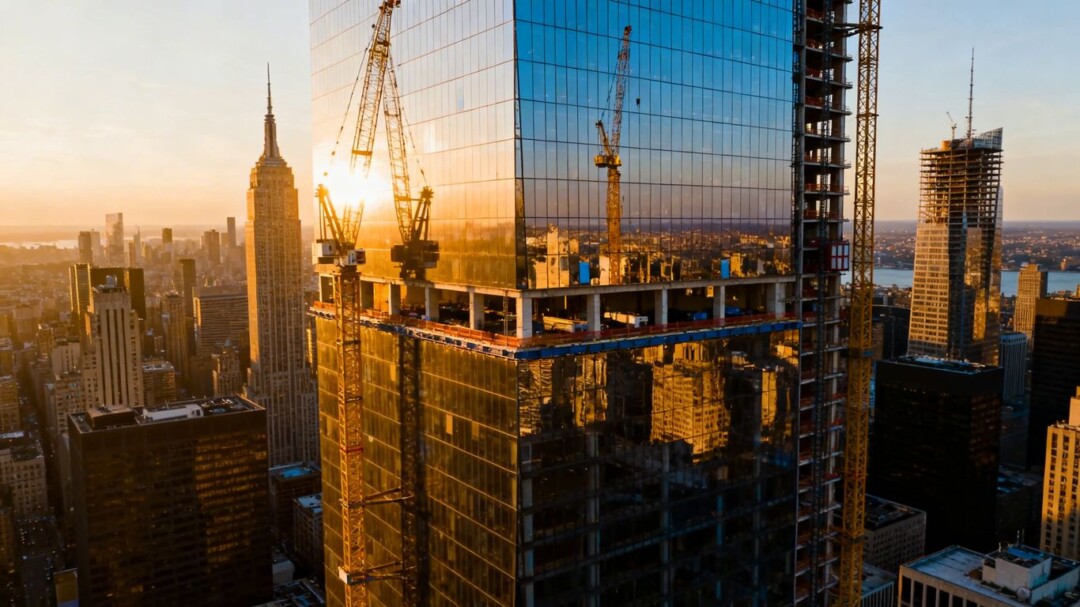
RXR, in collaboration with One Investment Management, has successfully closed on significant financing for the ambitious conversion of 61 Broadway, a historic office building in Manhattan’s Financial District, into a substantial residential tower. This project, valued at over $500 million, will introduce 796 new residential units to the area, with construction slated to commence this month and the first residents expected by mid-2028.
Key Takeaways
- RXR has secured over $500 million in financing for the conversion of 61 Broadway into a 796-unit residential tower.
- Construction is set to begin this month, with initial unit deliveries anticipated in the first half of 2028.
- The project benefits from its historic nature, making it eligible for state and federal tax credits.
Project Details and Financing
The 1913-built property at 61 Broadway is poised for a transformative change, aiming to address housing demand in Lower Manhattan. The project’s capital structure is robust, featuring a $55 million tax equity investment from JPMorgan, recognizing the building’s eligibility for state and federal historic tax credits. Additionally, affiliates of Apollo have provided $420 million in construction financing.
A JLL Capital Markets team, led by Andrew Scandalios, Drew Isaacson, David Giancola, and Jennifer Zelko, played a crucial role in representing RXR throughout the complex financing process.
RXR’s Vision for Urban Redevelopment
Scott Rechler, chairman and CEO of RXR, highlighted the project’s significance, stating, “61 Broadway demonstrates what can be achieved when thoughtful public policy meets private-sector expertise.” This initiative aligns with RXR’s broader strategy of revitalizing urban spaces through adaptive reuse. The firm is also undertaking other notable residential conversion projects, including the transformation of 5 Times Square in Midtown Manhattan.
The successful financing of 61 Broadway marks a significant step forward in repurposing underutilized office stock into much-needed housing, contributing to the evolving landscape of New York City’s real estate market.