

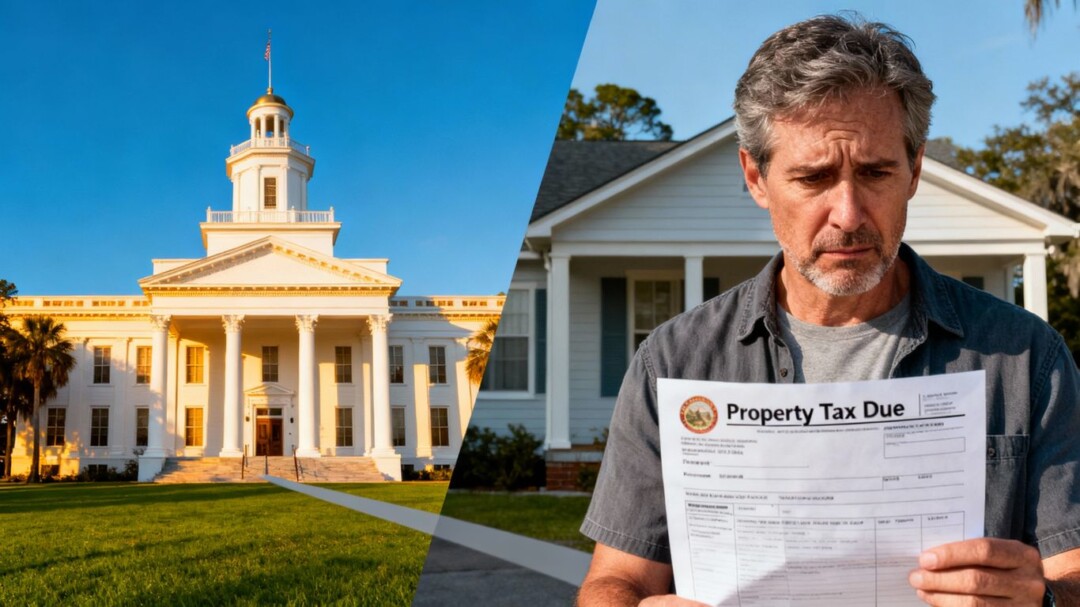
Florida lawmakers are pushing forward with significant property tax reform proposals, aiming to reduce the burden on homeowners. However, these advancements are raising serious concerns among local government officials who fear substantial cuts to essential services and a potential shift in the tax burden to renters and businesses. The debate centers on proposals to phase out or eliminate non-school property taxes for homesteads, a move championed by Governor Ron DeSantis and Republican legislators.
Key Takeaways
- Proposals in the Florida House aim to cut or eliminate non-school property taxes for homesteads.
- Local governments, especially smaller cities and counties, express deep concern over potential revenue shortfalls and service reductions.
- Critics argue that tax cuts could lead to increased sales taxes or place a greater burden on non-homestead property owners.
- The "Save Our Homes" cap on property value increases is also being considered for modification.
Local Government Funding Concerns
Cities and counties across Florida are voicing alarm over the potential impact of proposed property tax cuts. Officials in smaller municipalities, such as South Bay, rely heavily on property taxes to fund daily operations, including park maintenance, road upkeep, trash collection, and emergency services. Mayor Joe Kyles of South Bay highlighted that state lawmakers, not being on the ground daily, may not fully grasp the essential services funded by these taxes. The city’s modest $2.7 million budget and 21 employees could face significant cuts, potentially leading to reduced staffing and services.
Legislative Proposals and Potential Impacts
Several legislative proposals are advancing in the Florida House. House Joint Resolution 201 seeks to phase out non-school homestead property taxes over a decade by gradually increasing the homestead tax exemption. Another proposal, HJR 213, aims to limit increases in taxable values for homesteaded property under the "Save Our Homes" cap to 3 percent over three years, and non-homesteaded property to 15 percent over three years. While proponents argue these measures offer predictability and relief to homeowners, opponents warn of billions in lost revenue for local governments, special districts, and water management districts. Critics like Florida League of Cities Legislative Advocate Charles Chapman suggest that such changes could destabilize the local government funding system, potentially impacting bond ratings and leading taxpayers to pay more for fewer services.
Shifting Tax Burdens and Alternative Revenue
Concerns are mounting that the proposed property tax cuts could shift the tax burden onto renters and businesses. The Florida Policy Institute estimates that eliminating non-school homestead property taxes could lead to a $43 billion revenue shortfall statewide. Some speculate that the state might compensate by increasing sales taxes, with the Florida Chamber of Commerce estimating a potential rise from 6% to 8.85%. Local government officials question the feasibility and fairness of such alternatives, with some mayors sarcastically asking if bake sales or garage sales would be expected to cover the funding gap. The Florida Association of Counties argues that the benefits of these cuts would likely accrue to large special interests, snowbirds, and out-of-state owners, rather than everyday Floridians.
The "Save Our Homes" Cap and Future Outlook
Beyond the direct cuts to non-school property taxes, legislative efforts also target the "Save Our Homes" amendment, which limits annual increases in homestead property assessed values. While current law caps increases at the lesser of inflation or 3% annually, some proposals seek to modify this cap, potentially limiting increases to 3% over a three-year period for homesteaded properties. For non-homesteaded properties, limits on taxable value increases are also being considered. The debate is expected to intensify as the legislative session progresses, with both the House and Senate working to finalize their positions on what could be a pivotal year for Florida’s tax structure.
Sources
- Worries grow in small towns over possible property tax cuts, WPTV.
- Proposed Florida property tax cuts would affect localities, Bond Buyer.
- Florida House moves along proposal to cut property taxes, Orlando Sentinel.
- Amid property tax debate, some Florida lawmakers worry about cuts to parks, Tampa Bay Times.
- 2026 could be pivotal year in Florida, WPTV.