

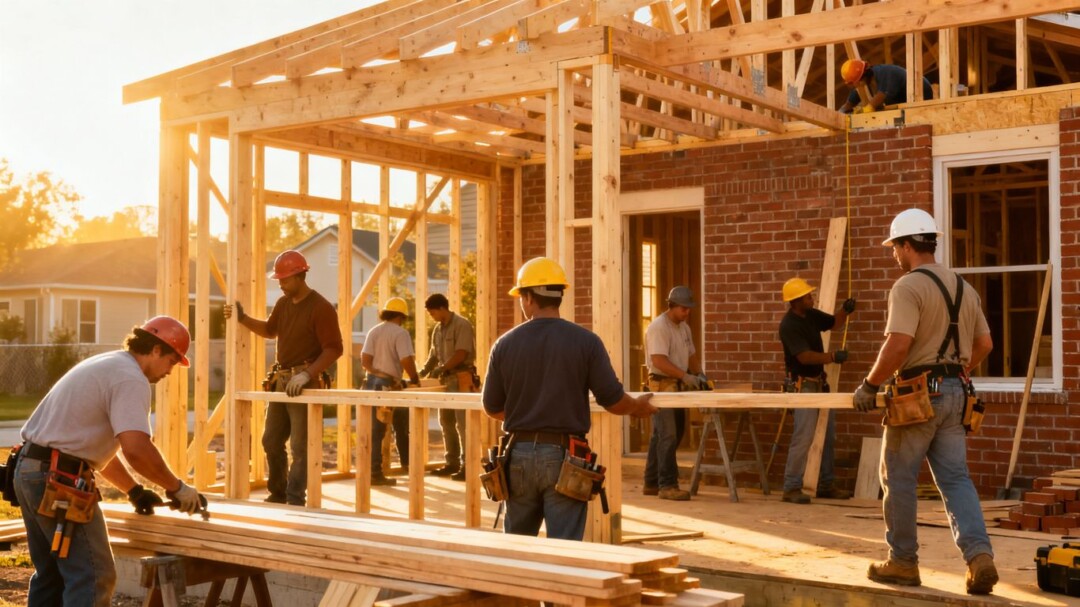
A recent study from Harvard University’s Joint Center for Housing Studies highlights the indispensable role of immigrant laborers in the nation’s housing construction sector. The report indicates that foreign-born workers are disproportionately represented in construction trades, particularly in major homebuilding metropolitan areas, underscoring their significance to the housing pipeline.
Key Takeaways
- Immigrants constitute a significantly larger percentage of the construction trades workforce compared to their overall representation in the national labor force.
- This trend is even more pronounced in top-tier homebuilding metros, where immigrants make up a majority of the trades workforce.
- A slowdown in immigration could exacerbate existing labor shortages and hinder housing production.
Immigrants Powering Construction Trades
The research found that in 2024, immigrants represented one in three workers within the construction trades sector, while making up only one in five of the total national workforce. This disparity is most striking in the seven metropolitan areas that have seen the highest volume of building permits issued between 2019 and 2023, with immigrants comprising 54% of the trades workforce in these booming regions.
Metro-Specific Trends
Dallas–Fort Worth–Arlington, a leader in homebuilding with 350,000 permits issued during the specified period, saw 61% of its construction trades workers as immigrants. Even in areas with slower housing growth, the proportion of foreign-born workers in trades remained high. Metros with 75,000 to 149,999 permits had an average of 40% foreign-born trade workers, while those with fewer than 75,000 permits still had 22% foreign-born representation.
Specializations and Future Concerns
Foreign-born tradespeople are most commonly found working as construction laborers and carpenters. They also form a substantial portion of specialized roles, making up three-fifths of plasterers and drywall installers, and half of all roofers, painters, and carpet, tile, and floor installers in 2024. Experts caution that recent trends of slowing immigration could negatively impact the housing market by limiting the available labor pool, potentially worsening chronic shortages and constraining the capacity for new home construction and remodeling.