

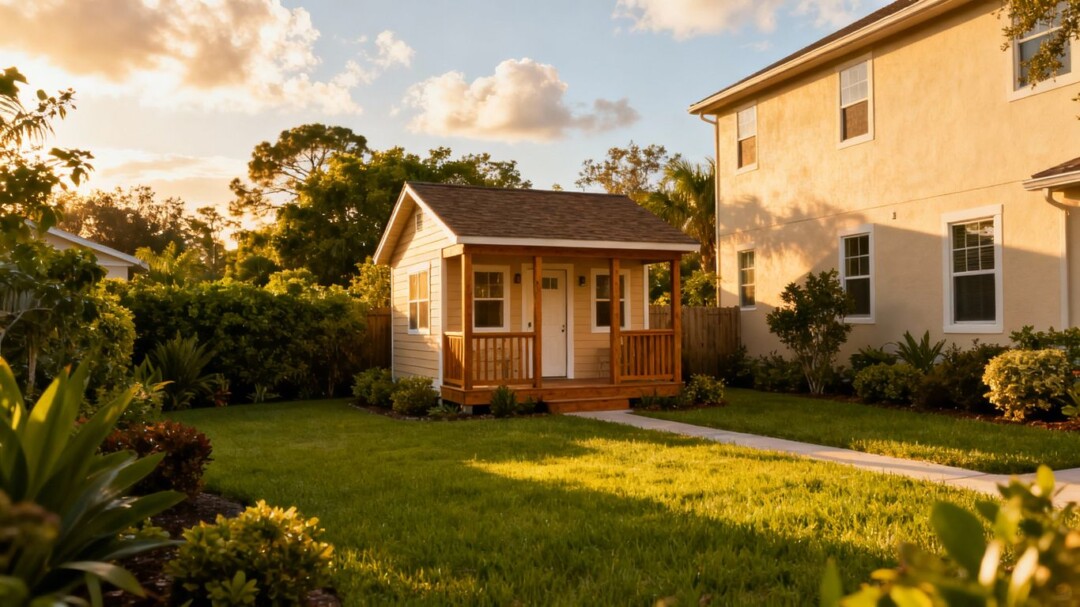
Florida lawmakers are once again poised to debate the legalization of accessory dwelling units, commonly known as "granny flats." These secondary housing units on existing residential lots, such as converted garages or detached studios, could see standardized regulations across the state if a new bill passes. This move aims to streamline the process for homeowners and potentially boost the availability of affordable housing options.
Key Takeaways
- A proposed bill, SB48, seeks to mandate that cities and counties adopt ordinances allowing accessory dwelling units (ADUs).
- Current state law leaves ADU regulation to local governments, resulting in over 400 different sets of rules.
- Standardization could lead to an estimated 30,000 to 60,000 new ADUs being built in the next decade.
- Disagreements over regulating ADUs as short-term rentals were a major hurdle for similar legislation last year.
Standardizing Accessory Dwelling Units
Senator Don Gaetz (R-Niceville) has filed Senate Bill 48, which would require municipalities to establish or modify ordinances to permit ADUs in designated areas. Currently, Florida’s diverse local regulations create a complex landscape for homeowners interested in building these units. Kody Glazer, chief legal and policy officer for the Florida Housing Coalition, noted that the "over 400 different ways that ADU laws are structured" can be difficult for individuals to navigate.
Addressing the Affordable Housing Crisis
Accessory dwelling units are frequently promoted as a component of Florida’s affordable housing strategy due to their typically smaller size and potential for lower rental costs. Glazer estimates that standardizing ADU laws could facilitate the construction of between 30,000 and 60,000 such units over the next ten years.
The Short-Term Rental Debate
A significant point of contention in previous legislative attempts has been the regulation of ADUs as short-term rentals. Concerns about these units being used as "party houses" led to the failure of a similar bill in the final hours of the last legislative session. The disagreement centered on whether to allow or prohibit short-term rentals and how to enforce such rules. While the Senate version proposed allowing municipalities to restrict rentals to stays longer than a month, the House disagreed. Both the current Senate and House versions of the bill reportedly include provisions for short-term rental regulation, suggesting a potential repeat of last year’s debate.