

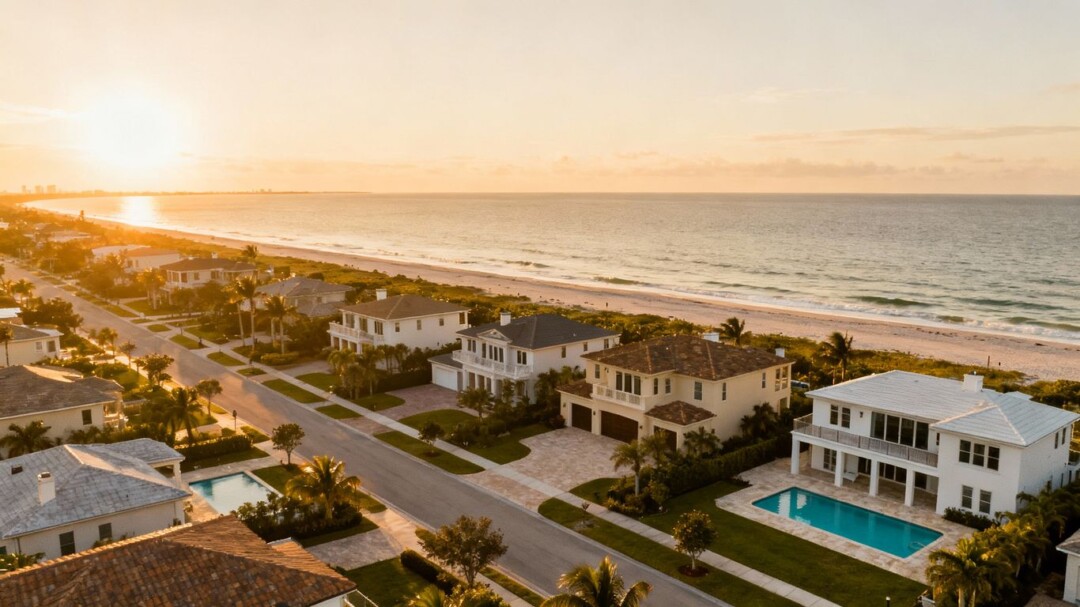
South Florida’s once-booming housing market is experiencing a significant slowdown, marked by a sharp decline in foreign buyer interest and a pullback from real estate investors. This cooling trend is attributed to a confluence of factors including rising costs, increased regulations, and a less favorable economic climate, leading to longer selling times and a surplus of available properties.
Key Takeaways
- Sales to foreign nationals have plummeted, reaching their lowest point in over a decade.
- Investor purchases have seen substantial year-over-year decreases in key South Florida metros.
- Rising insurance premiums, HOA fees, and new condo safety regulations are contributing to decreased affordability and buyer confidence.
- Geopolitical tensions, currency fluctuations, and restrictive immigration policies are deterring international investors.
Foreign Buyers Flee the Sunshine State
South Florida, long a prime destination for international real estate investment, is now witnessing a dramatic drop in foreign buyer activity. Sales to foreign nationals have fallen to just 10% of all transactions in the region, a stark contrast to the 50% recorded in 2018. This decline is driven by a combination of a surging U.S. dollar, elevated interest rates, and growing concerns over U.S. immigration policies and international trade disputes. Many foreign buyers, who once viewed Florida real estate as a secure investment, are now hesitant due to these shifting economic and political landscapes.
Investors Pull Back Amidst Market Weakness
Real estate investors are also retreating from Florida at a faster pace than in the rest of the U.S. Cities like Orlando, Miami, and West Palm Beach have seen significant drops in investor purchases. Factors such as an uncertain economy, high mortgage rates, and a bleak outlook for investment profits are contributing to this trend. Furthermore, the increasing frequency of natural disasters in coastal Florida has led to soaring insurance costs and higher HOA fees, making properties less attractive for investment.
Regulatory Changes Impacting Condominium Market
The 2021 Surfside condominium collapse has prompted new state legislation requiring more stringent structural inspections and increased reserve funding for older buildings. These regulations, while aimed at enhancing safety, have made many aging condominiums ineligible for conventional mortgages and have led to substantial increases in HOA fees. Consequently, hundreds of buildings are now facing challenges in securing financing, further dampening demand, particularly for properties built before 1990.
Market Slowdown and Future Outlook
The combination of reduced foreign investment, investor caution, and increased regulatory burdens has led to a significant slowdown in South Florida’s housing market. Homes are staying on the market longer, and some are selling below asking price. While the national housing market faces its own affordability challenges due to a shortage of supply, South Florida is currently experiencing a unique period of deflation in its previously inflated market. The long-term impact of these trends remains to be seen, but the current environment signals a notable shift from the region’s recent boom.
Key Takeaways
- Florida real estate crisis worsens as key group pulls back investment in the state, Daily Mail.
- Florida’s property woes increase as foreigners abandon Sunshine State, MPA Mag.
- Foreign Buyers Step Back From South Florida Condos, The New York Times.
- Foreign Buyers Tap The Brakes On Miami Condo Purchases, Bisnow.
- South Florida now emerging as the ‘epicenter of housing weakness’ — but will it spread to the rest of the US?, Yahoo Finance.